Estimate appliance electricity from watts, hours and your tariff
Use a transparent constant-power example and keep it separate from measured consumption.
Updated:

Choose a power figure you can explain
A power input needs a description. Is it a rating, a documented operating figure or your own measured average? Meaco's 12L Low Energy product page presents power alongside specified conditions. That is a reminder to keep the source and conditions with a number rather than treating every wattage as a promise about all-day consumption.
For this guide, all calculation inputs are hypothetical and deliberately simple. They do not describe a tested appliance. If you use a manufacturer's figure, record the mode and conditions it belongs to. If you do not know the average draw, label the result as a scenario and resist calling it your actual annual bill.
Meaco UK: 12L Low Energy specifications ?
Work through the units
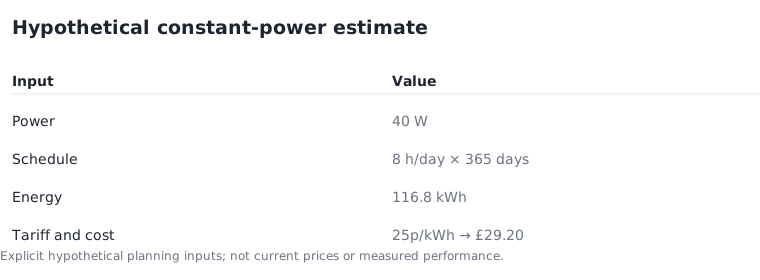
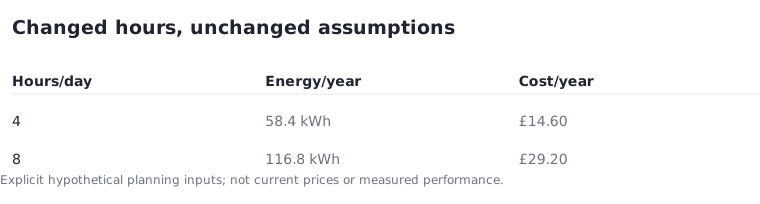
Assume a device draws a constant 40 W for 8 hours per day over 365 days. Divide watts by 1,000 to obtain kilowatts, then multiply by hours and days. The example uses 116.8 kWh. At an assumed tariff of 25p per kWh, the resulting electricity cost is £29.20 for that stated period.
The tariff is an invented input, not the current UK price cap or a quote for your household. Enter your own unit rate from a reliable tariff record. Do not type pounds into a field labelled pence: £0.25 and 25p represent the same rate, but entering 0.25 into a pence field would make the estimate one hundred times too small.
Keep the schedule plausible
The example's 8 hours per day is a planning assumption. An appliance that cycles, changes fan speed or stops when a target is reached may not draw the same power throughout the scheduled period. Likewise, standby consumption may sit outside the simple operating-hours calculation. Do not silently treat the schedule as a measurement.
Compare a second hypothetical schedule of 4 hours per day with the same 40 W and 365 days. It uses 58.4 kWh and costs £14.60 at the assumed 25p rate. This shows the arithmetic effect of halving operating time, not a recommendation to reduce operation or a claim that performance remains equivalent.
Understand what the estimate leaves out
The tool excludes standing charges, purchase cost, filters and other consumables. It also does not predict changes in humidity, air quality or room temperature. Keep those questions in separate records so that a low electricity figure does not become a substitute for suitability. The cheapest scenario is not necessarily a useful operating plan.
If you later obtain a measured energy total, record the measurement period and operating conditions. Compare equivalent periods before replacing the planning estimate. Avoid presenting a short observation as a guaranteed annual result, particularly if the season, room or appliance settings are likely to change.
Save a calculation somebody else can repeat
Write down the power source, daily hours, number of days and tariff units. Include the result and the date. Our electricity tool displays the energy and GBP estimate together so you can spot a changed tariff without confusing it with changed energy use. Zero operating hours produces zero operating energy in this model; it says nothing about standby.
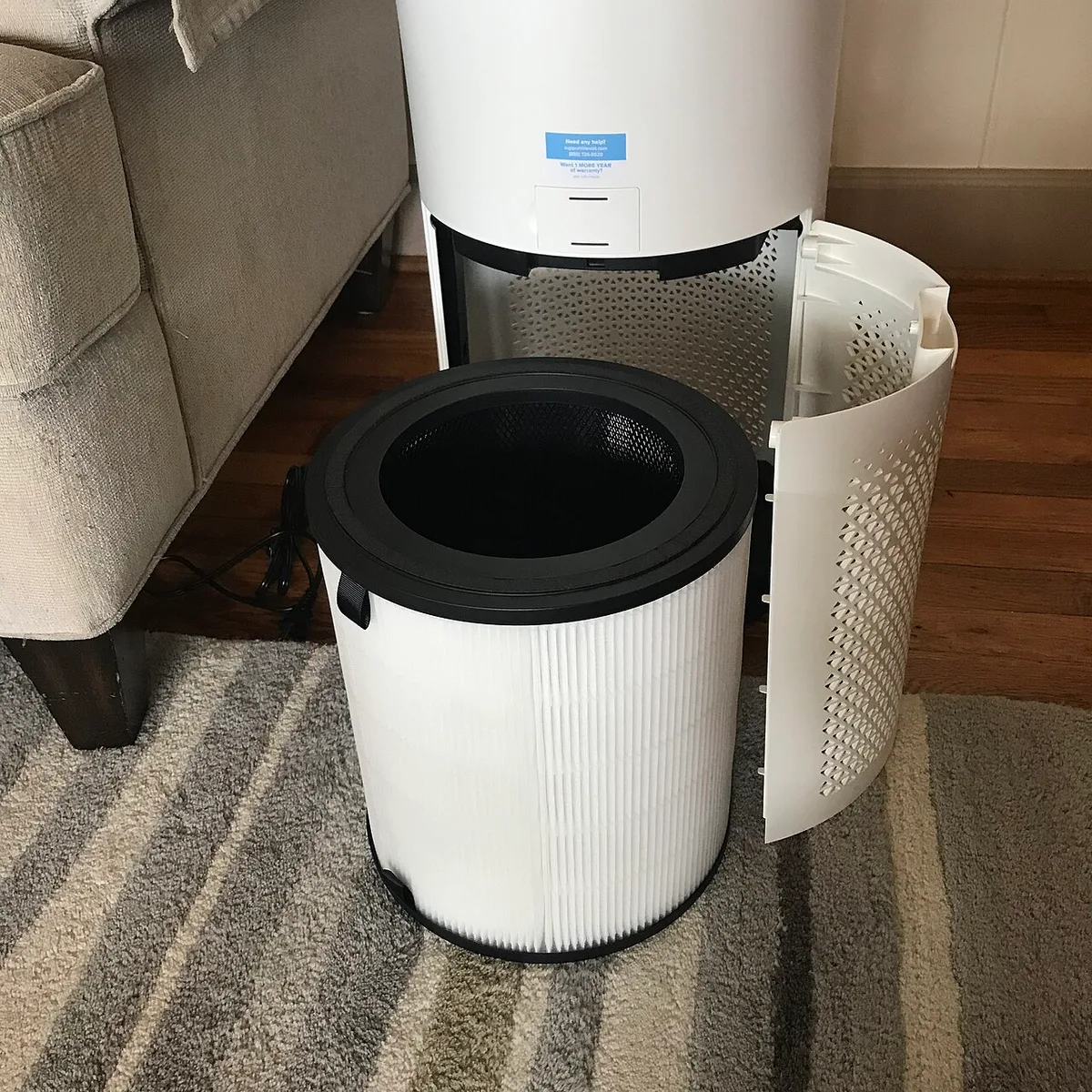
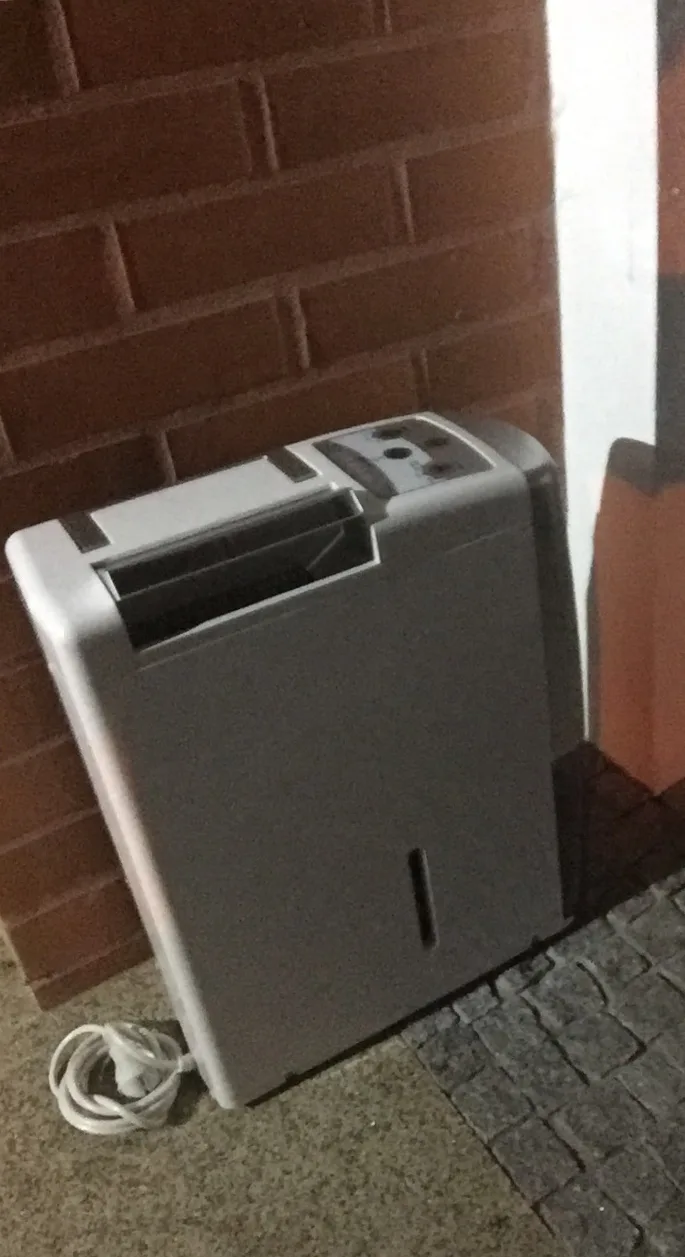
The photographs show different physical appliance types, not comparative efficiency measurements. A filter housing, water-level window or humidity display cannot reveal an annual electricity cost. Keep your input sheet beside the exact product documentation and revisit the estimate whenever a meaningful assumption changes.