Compare running costs without hiding the assumptions
Put electricity and consumables in separate rows before combining a like-for-like planning total.
Updated:

Keep the categories separate
An appliance ownership comparison can include electricity, replacement consumables and initial accessories, but those costs arise in different ways. Philips' filter guidance illustrates that cleaning and replacement are distinct tasks. Do not invent a recurring purchase for a component that is maintained differently, or remove a required replacement simply to improve a comparison.
Begin with separate rows for purchase price, setup items, electricity and each relevant consumable. Label unknown entries as unknown. A total that silently treats missing information as zero is not a complete comparison. Keep the model and source date with every actual quote so the arithmetic can be checked later.
Philips UK: cleaning filters and pre-filters ?
Use one electricity scenario for both candidates
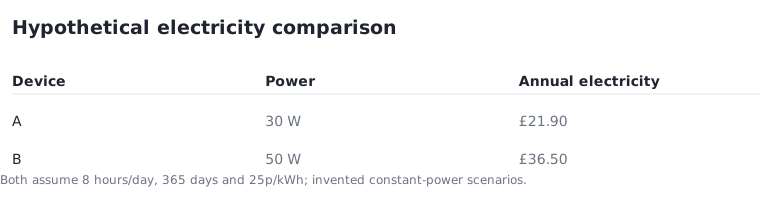
Assume two hypothetical devices run for 8 hours per day over 365 days at an invented tariff of 25p per kWh. If their constant power assumptions are 30 W and 50 W, their calculated energy totals are 87.6 kWh and 146 kWh. The corresponding electricity estimates are £21.90 and £36.50.
These invented devices are not products we tested or recommend. Keeping hours, days and tariff identical isolates the arithmetic effect of the power input. Actual operation may vary by settings and conditions; manufacturer power figures should retain their context, as illustrated by Meaco's condition-based specification presentation. Do not call the example a guaranteed saving.
Meaco UK: 12L Low Energy specifications ?
Add a clearly labelled consumable allowance
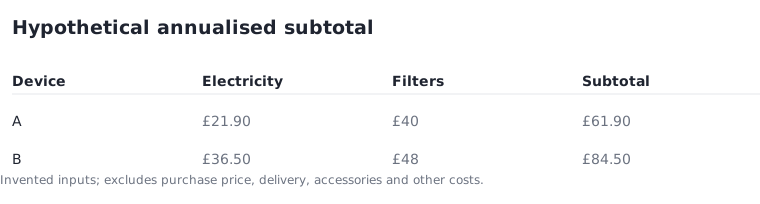
Now assume device A needs a hypothetical £40 replacement every 12 months, while device B needs a hypothetical £24 replacement every 6 months. Their annualised consumable allowances are £40 and £48. Add those to the electricity scenarios to obtain £61.90 and £84.50 respectively.
The replacement intervals are invented for the example, not care advice. Use actual model instructions and exact part quotes in a real comparison. Annualising also differs from cash spent in a particular calendar year, because purchase dates and pack quantities matter. Keep those details visible if you are planning when money will leave your account.

Do not let a subtotal decide suitability
The example excludes purchase price, delivery, accessories, servicing and any other item you have not entered. It also says nothing about capacity, noise, maintenance access or whether either appliance performs the job you need. A lower subtotal is only lower under the stated assumptions; it is not a complete product ranking.
Make a separate suitability checklist before using the cost sheet. If one candidate cannot meet a documented requirement, a small electricity estimate does not repair that mismatch. Likewise, do not assume a more expensive consumable is automatically better. Keep performance evidence and price arithmetic in distinct parts of the decision.
Review the sheet when an input changes
Save the inputs, source links and calculation date. When a tariff, replacement quote or usage assumption changes, update the affected row and retain the reason. Our electricity and filter tools can help with the separate calculations, but they do not supply current retail prices or decide the correct maintenance interval.
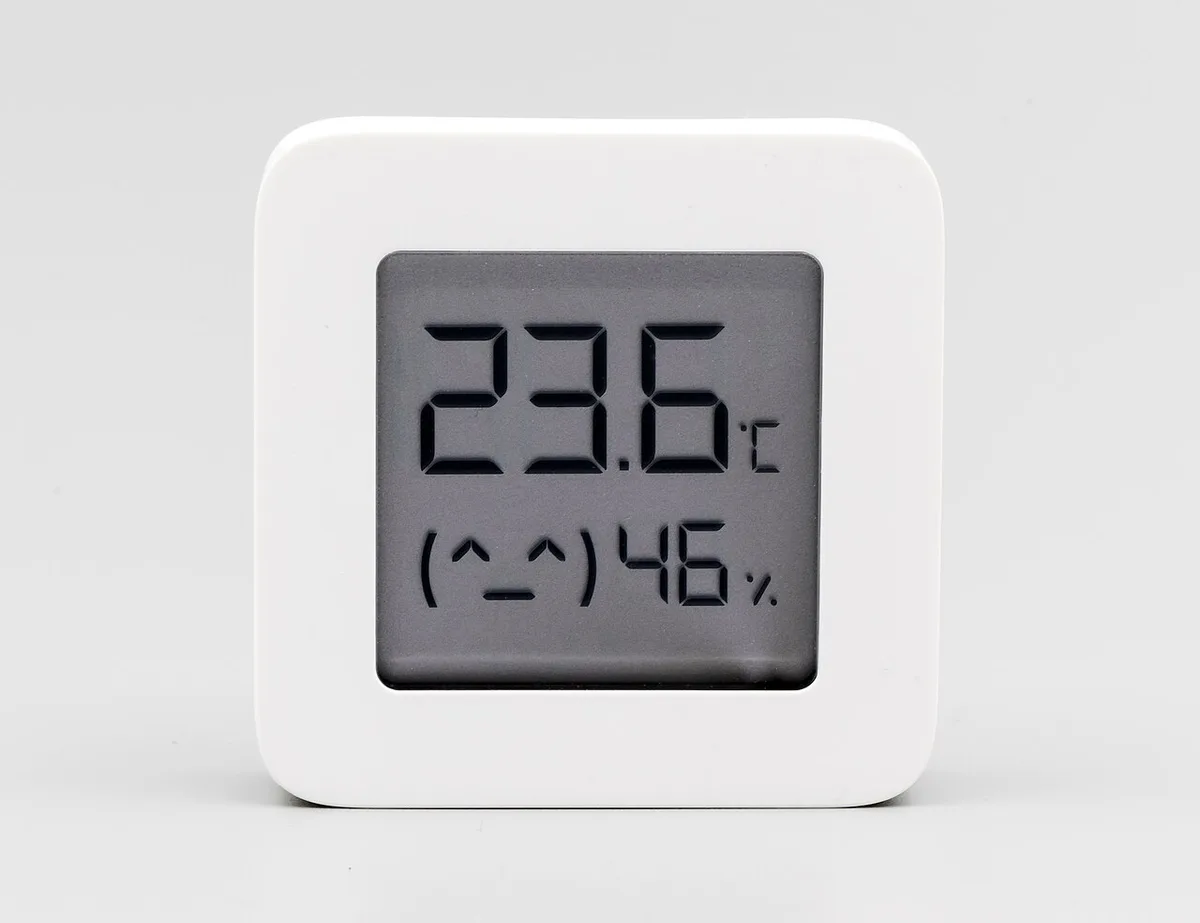
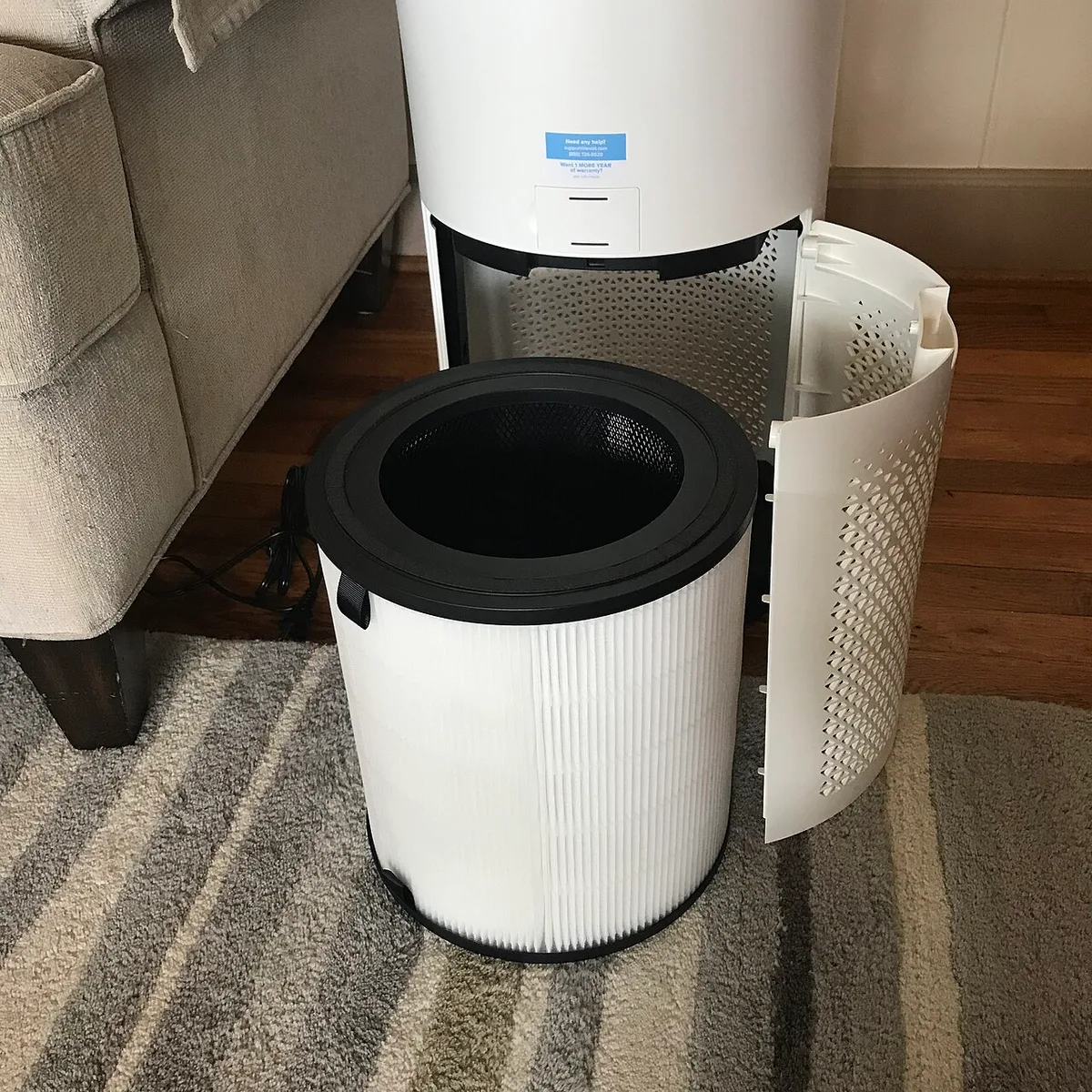
The photographs illustrate an appliance body, a removable filter and a separate environmental display. They are not comparative efficiency measurements. Use them as reminders that ownership includes different tasks and quantities. A useful cost comparison remains transparent enough for somebody else to repeat, including the entries that are still uncertain.