Equivalent air changes are a comparison, not fresh-air delivery
Understand the arithmetic behind a cleaner coverage figure without confusing recirculation with ventilation.
Updated:

Keep the word equivalent
An air cleaner can repeatedly filter air already in a room. That process is different from replacing indoor air with outdoor air. Energy Saving Trust explicitly separates purifiers from ventilation. Keep the distinction visible when reading a claim about air changes, especially if the headline could be mistaken for a supply of fresh air.
Write down whether the source is describing ventilation, a filtration-equivalent rate or simply fan airflow. These are different questions even when their units look related. A useful comparison starts with the source's definition. If the definition is missing, save the page and ask for clarification before turning the number into a buying rule.
Energy Saving Trust: home ventilation ?
Follow a deliberately simple example
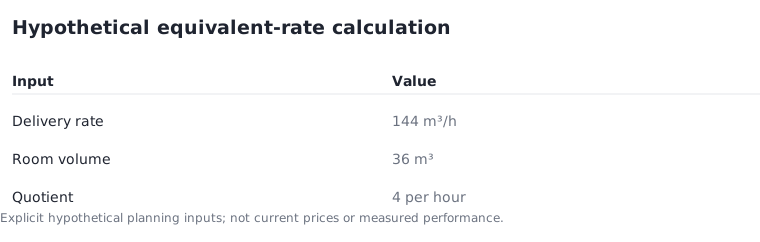
Imagine a hypothetical clean-air delivery rate of 144 m³/h and a room volume of 36 m³. Dividing 144 by 36 gives an equivalent rate of 4 per hour. The time basis is 1 hour, or 60 minutes. This is arithmetic with invented inputs, not a recommendation for a room, pollutant or person.
The example assumes the two quantities are appropriate to compare and keeps the operating condition unchanged. It does not simulate airflow around furniture, a doorway or a high ceiling. It also does not say that every part of the room receives identical treatment. Treat it as a way to understand a specification, rather than a prediction of what your sensor will display.
Check the room-size basis
AHAM's programme describes a suggested room-size basis of 4.8 equivalent air changes per hour. Keep that programme context attached to the figure. A different company's advertised coverage may use another basis, so the largest stated area is not automatically the strongest performance claim. The source should explain how its suggested area was obtained.
For an editorial comparison, use 3 steps: identify the documented delivery rate, record the assumed room volume, then calculate only if the units and conditions match. If any input is missing, write “not established” instead of reverse-engineering a convenient answer from marketing text. A documented uncertainty is part of a useful comparison.
AHAM Verifide: air changes per hour FAQ ?
Notice what happens when volume changes
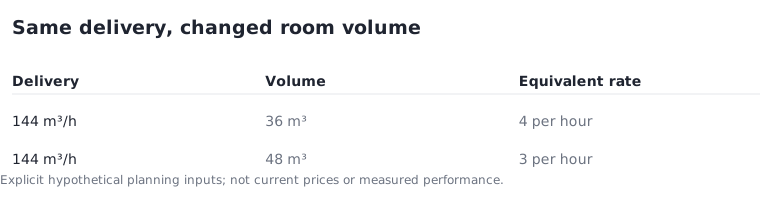
Keep the hypothetical delivery rate at 144 m³/h, but change the example room volume from 36 m³ to 48 m³. The arithmetic changes from 4 to 3 equivalent changes per hour. This does not measure either room; it simply shows why the denominator matters. A coverage statement that omits height can hide an assumption you need to understand.
Do not subtract furniture volumes or combine several rooms casually to make the result look better. Use the manufacturer's stated method and ask how an unusual layout should be handled. The goal is a defensible input sheet, not the most flattering number that can be produced with a calculator.
Use the result for a better question
Save the model, mode, rate, units, room assumptions and source date in one place. Ask whether the documented figure applies to the setting you intend to use. If your main concern is ventilation, keep that question separate from choosing a recirculating cleaner. A favourable equivalent-rate calculation cannot certify the whole indoor environment as safe.
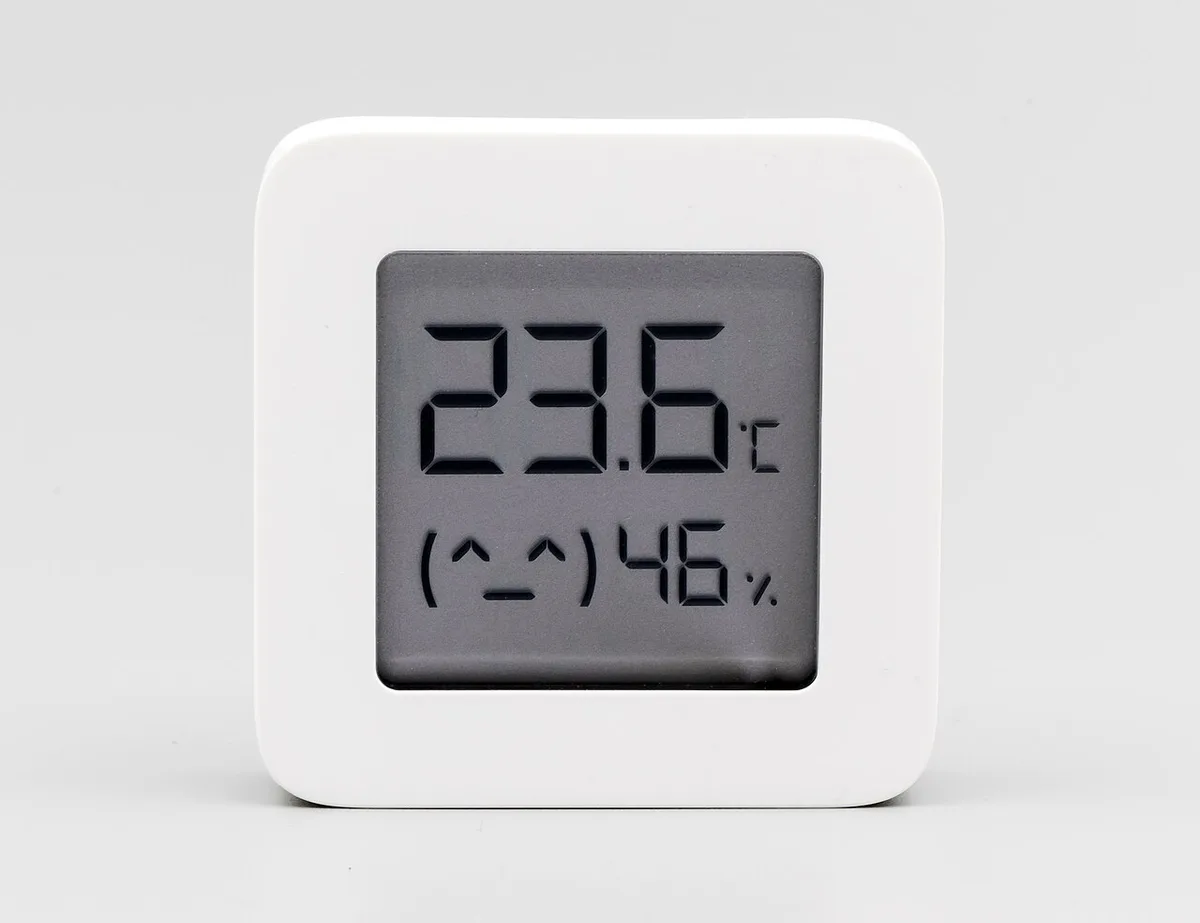
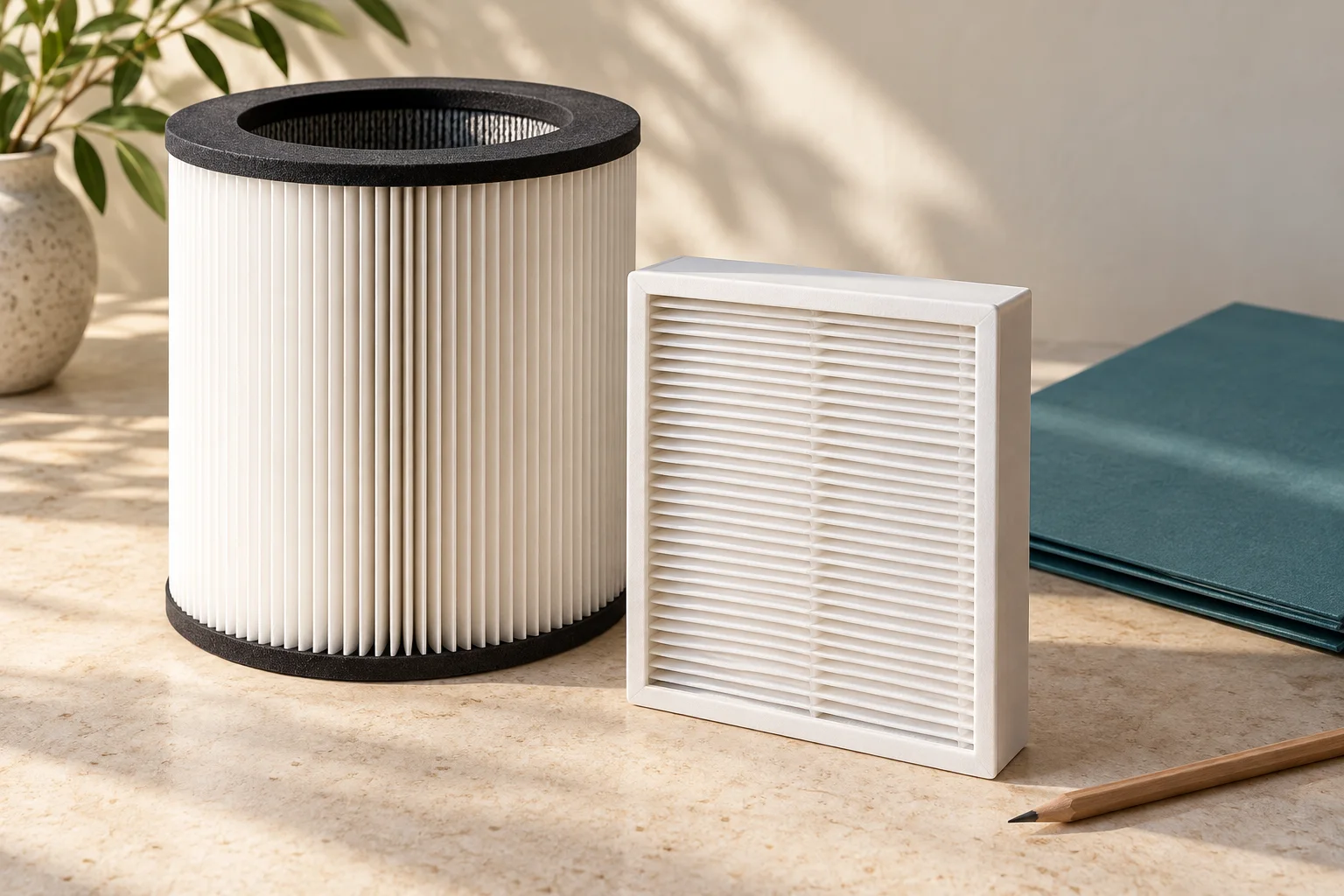
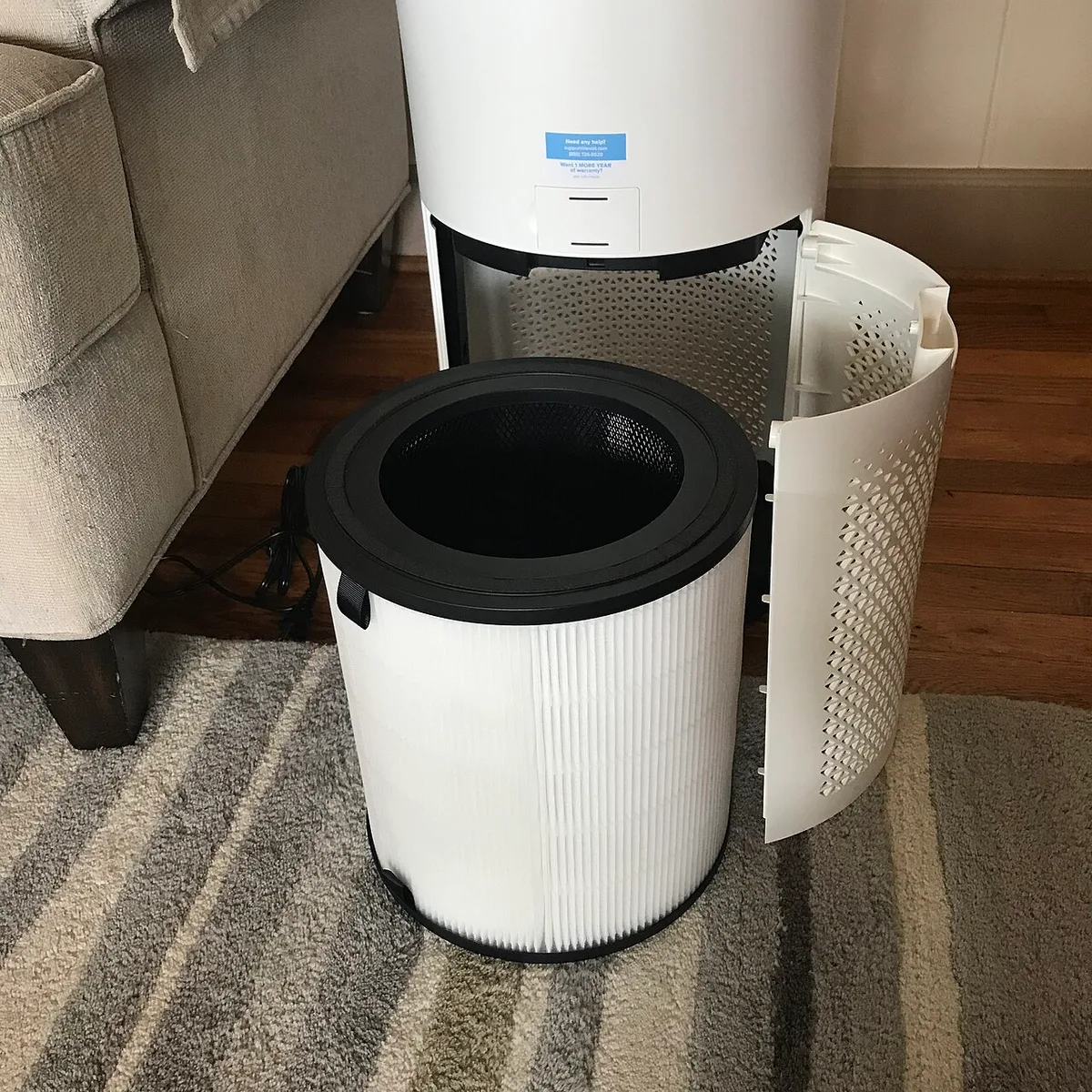
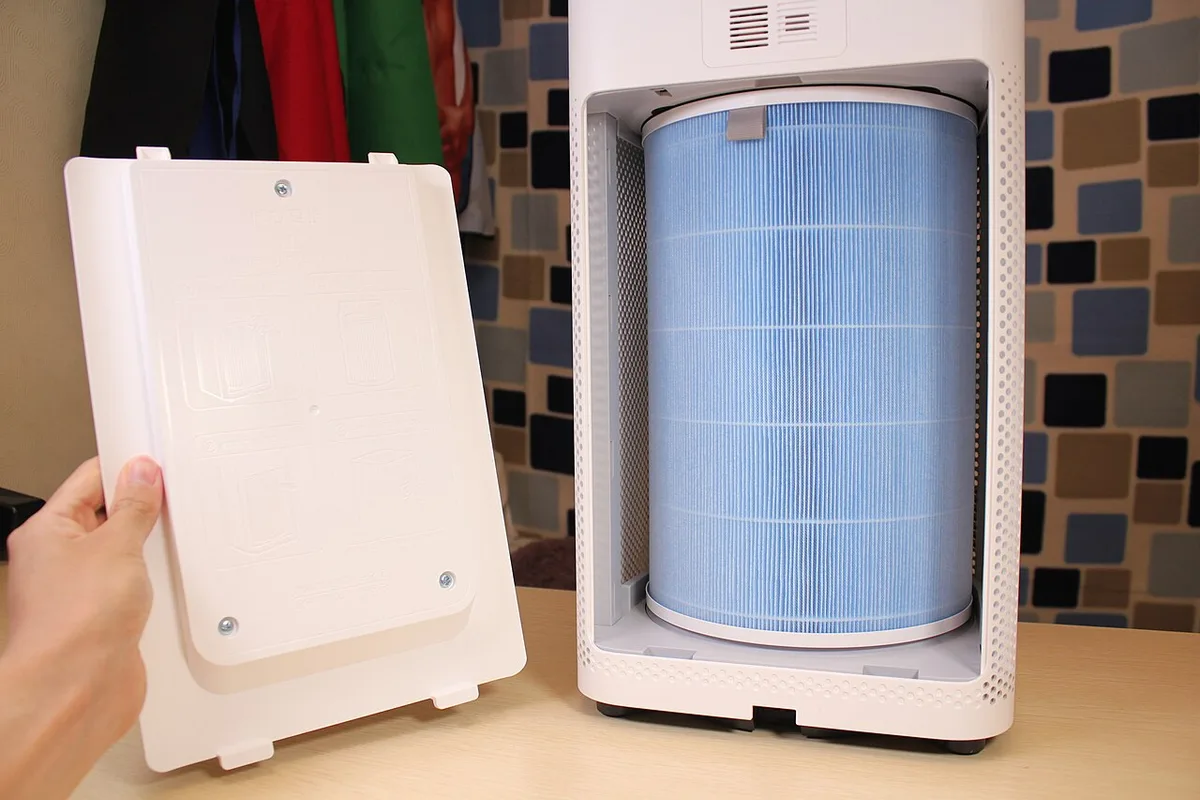
The photographs illustrate filter access and a separate humidity display. Neither can verify an air-change rate. They are included to keep the physical appliance and the measurement limits in view while you work through the arithmetic. Before ordering, return to the exact model instructions and the unresolved questions on your room sheet.