Check the filter code before ordering a replacement
A short identification record can prevent a plausible-looking filter becoming the wrong purchase.
Updated:
Separate cleaning from replacement
Philips' UK support article explains that standalone pre-filters and other filters can have different care instructions, while layered filters have their own surface-cleaning guidance. Start with the manual for your actual model. Do not interpret a cleaning reminder as permission to wash every component, and do not assume every reminder means a new purchase is needed.
This guide is an identification workflow, not a universal maintenance procedure. Keep the appliance switched off and follow its own instructions before accessing a filter. If the documentation does not clearly identify the part, contact the manufacturer with the model details. A photograph can help explain the question, but appearance alone cannot confirm compatibility.
Philips UK: cleaning filters and pre-filters ?
Capture the identifiers in one place
Use 3 steps to create the record: copy the full appliance model, locate the documented replacement reference, then compare it with the exact listing you intend to buy. Preserve punctuation and regional suffixes. Do not shorten a model name just because several search results share its first few characters.
Read the identifier 2 times against the original label or manual before saving it. This is an editorial checking habit, not a manufacturer procedure. Keep a clear photograph privately if it helps, taking care not to publish serial numbers or personal purchase details unnecessarily. The useful record is the part match and its evidence, not a public archive of your household equipment.
Read what the listing includes
A replacement listing might contain one combined filter, a pair of identical filters or several different components. Write the contents in ordinary words beside the product code. If the listing claims to fit several models, check that your complete identifier appears in the relevant compatibility information rather than relying on the page title.
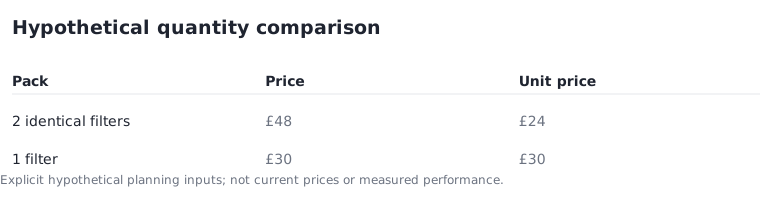
For a hypothetical comparison, a £48 pack of 2 identical filters has a simple unit cost of £24. A £30 single filter is a different quantity. That arithmetic helps compare prices only after compatibility has been established; a lower unit price cannot make an unsuitable part fit or reproduce the original performance claim.
Keep uncertainty visible
If the manual names one reference and a retailer shows another, do not invent a conversion between them. Ask whether the code has been superseded and request the official compatibility record. Save the answer and its date with the order details. A seller's broad phrase such as “universal” is not the same evidence as a documented model match.
Check whether the part is available from the manufacturer or an authorised source and what the return conditions actually say. Do not assume a photographed package is current stock. These are questions to resolve before ordering, especially when a listing combines several variants under one page and the selected option changes the contents.
Finish with a reusable ownership note
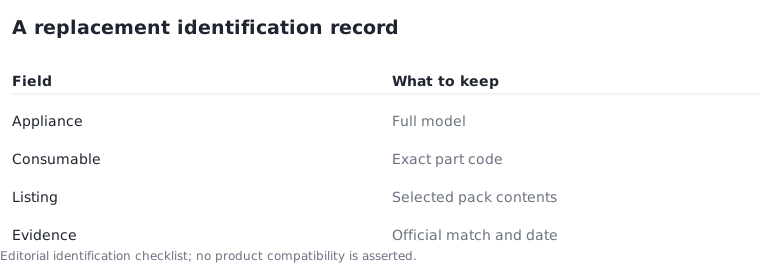
Keep the model, replacement code, pack contents, source link and date together. Add the actual purchase date and the instructions relevant to installation or resetting an indicator, without copying a different model's button sequence. When a future reminder appears, you can revisit the record instead of repeating an uncertain search.
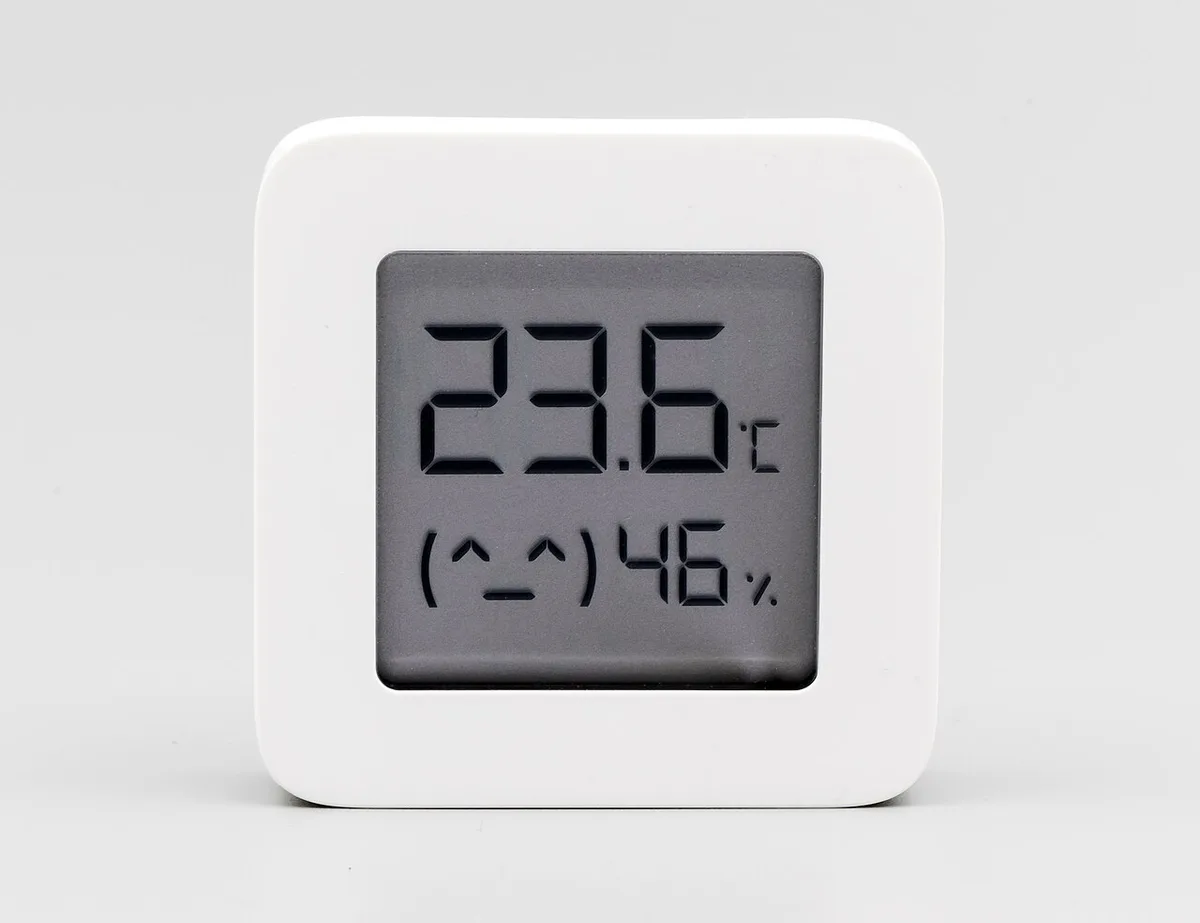
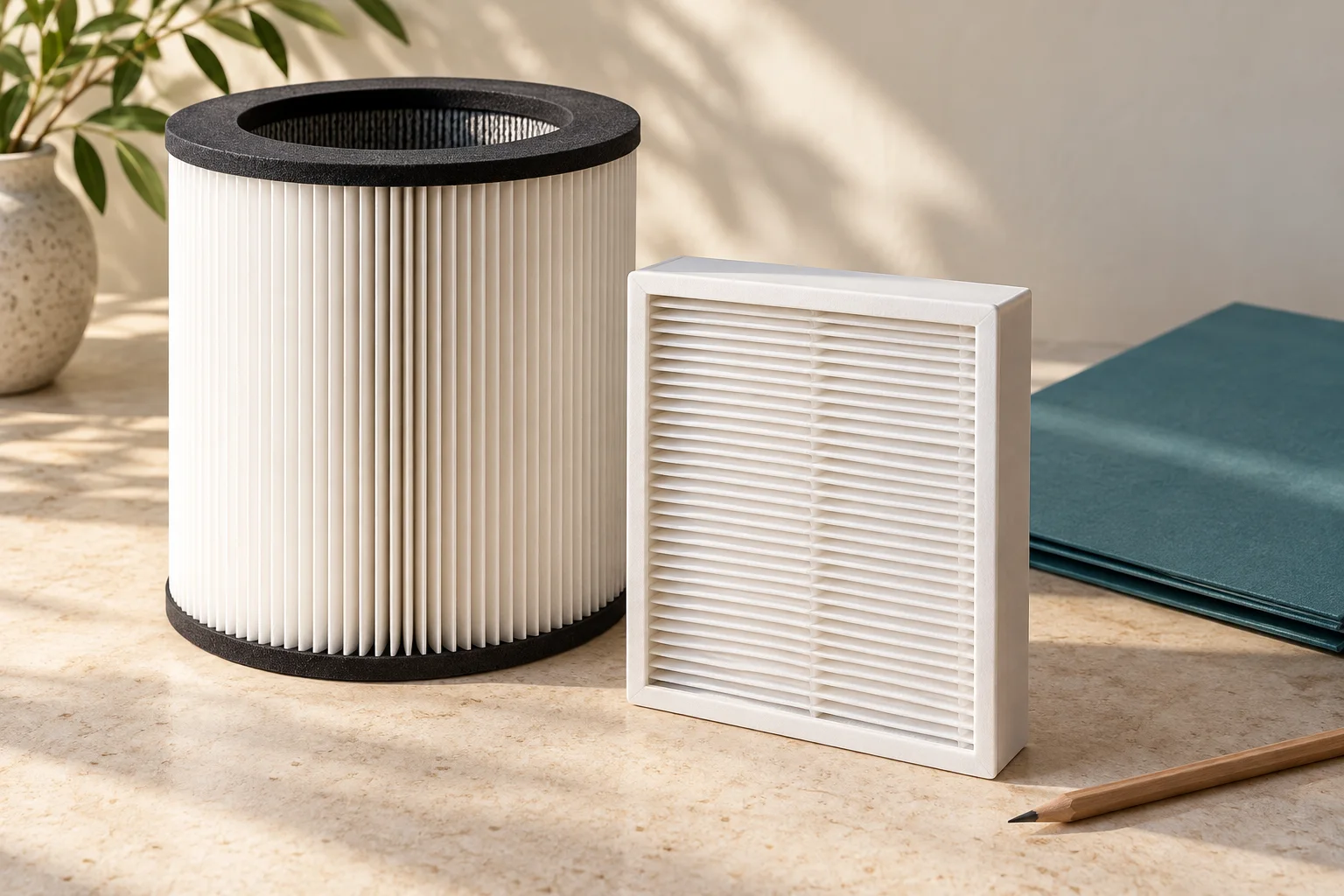
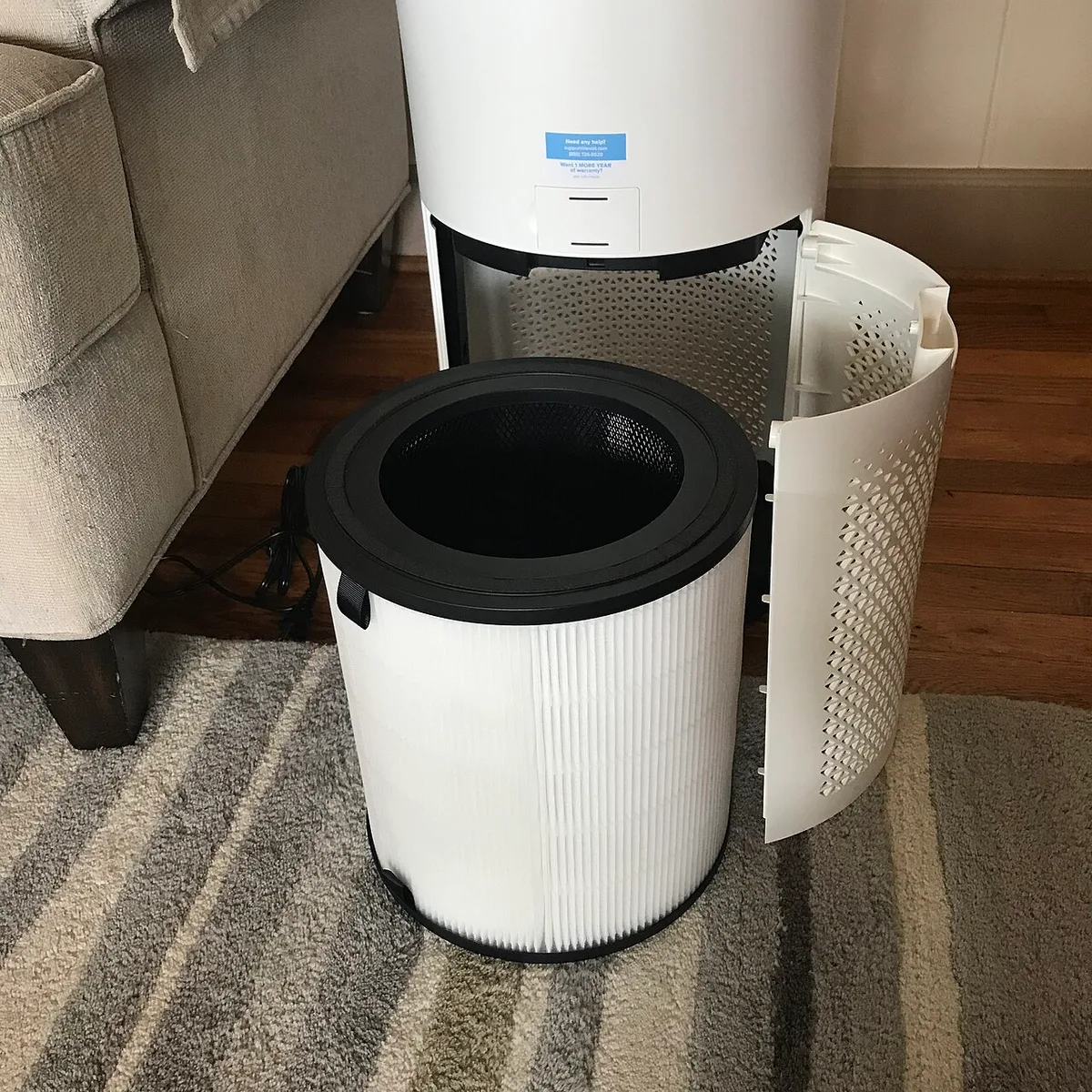
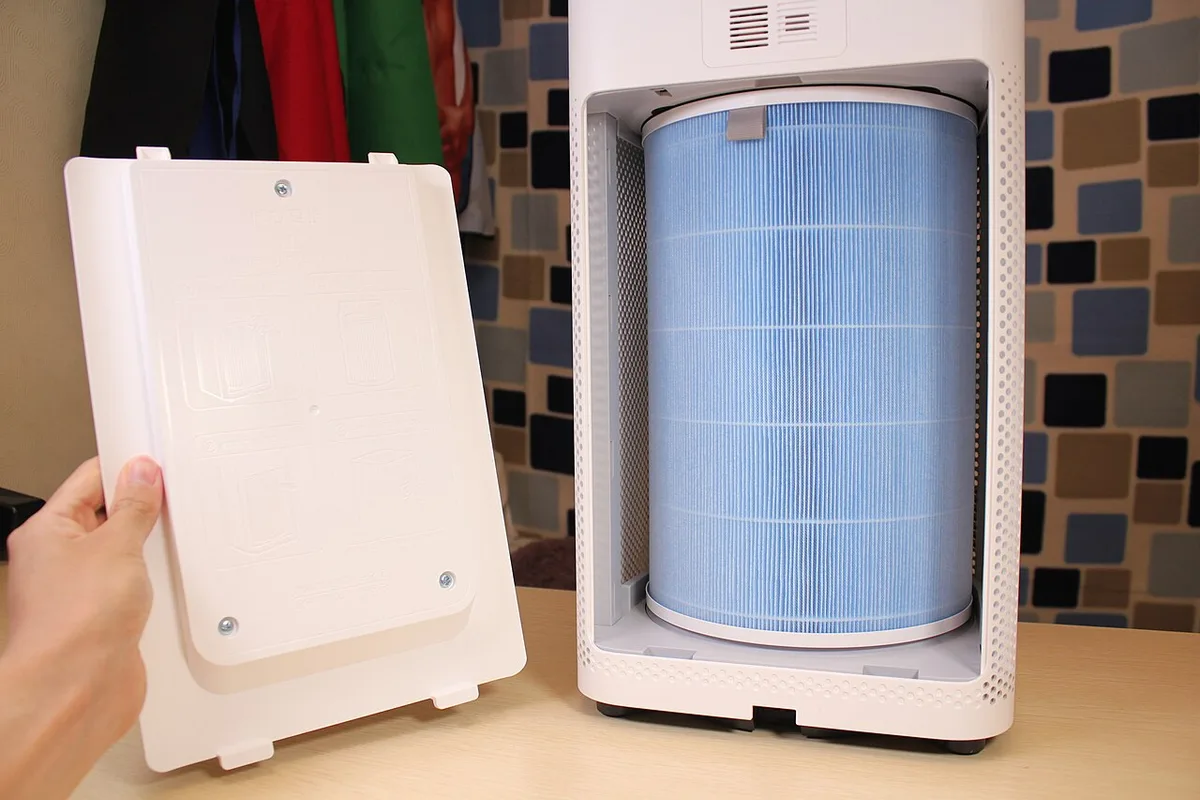
The two filter photographs deliberately show different housings. They support the need to identify the exact component; they do not endorse either old product. The humidity display illustrates a separate measurement that cannot identify a replacement filter. A useful record makes the next decision easier while keeping compatibility, cleaning and environmental measurements as distinct questions.