A CO2 reading is not a complete indoor-air safety score
Keep workplace ventilation guidance, the device measurement and the question you need answered in their proper scope.
Updated:
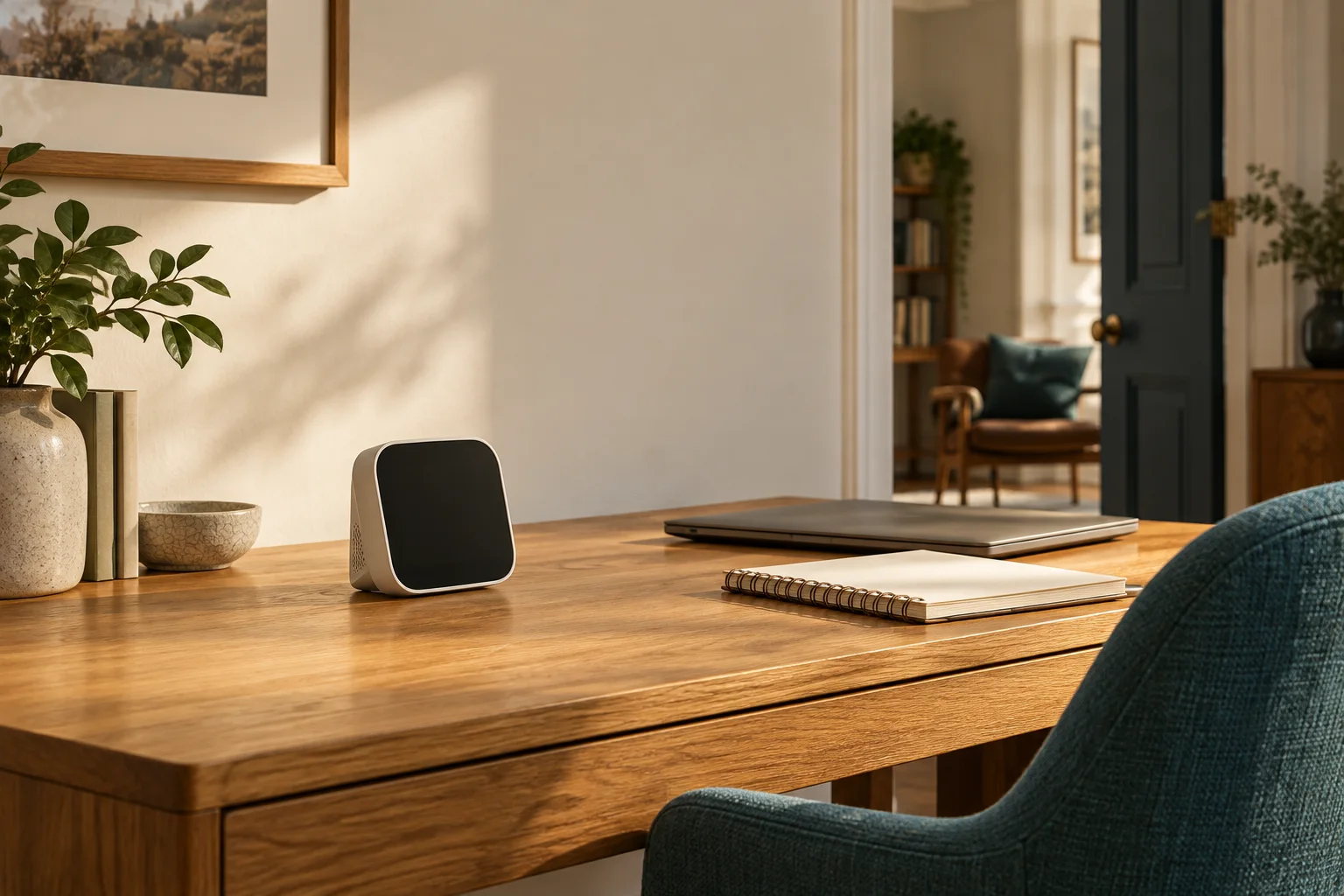
Keep the guidance in context
HSE's CO2-monitor guidance is written for workplaces and describes readings as a broad ventilation guide rather than a demonstration of safe levels. That scope matters when a household buyer reads a simplified online chart. Do not turn a workplace indicator into a universal domestic safety certificate or a diagnosis.
Start by writing the question you want the monitor to help describe. Is it a repeated pattern in an occupied space, a change after moving the device, or a request for advice about ventilation? A precise question makes the limitations easier to see. The instrument's display is one piece of information, not an answer to every indoor-environment concern.
HSE: using CO2 monitors in workplaces ?
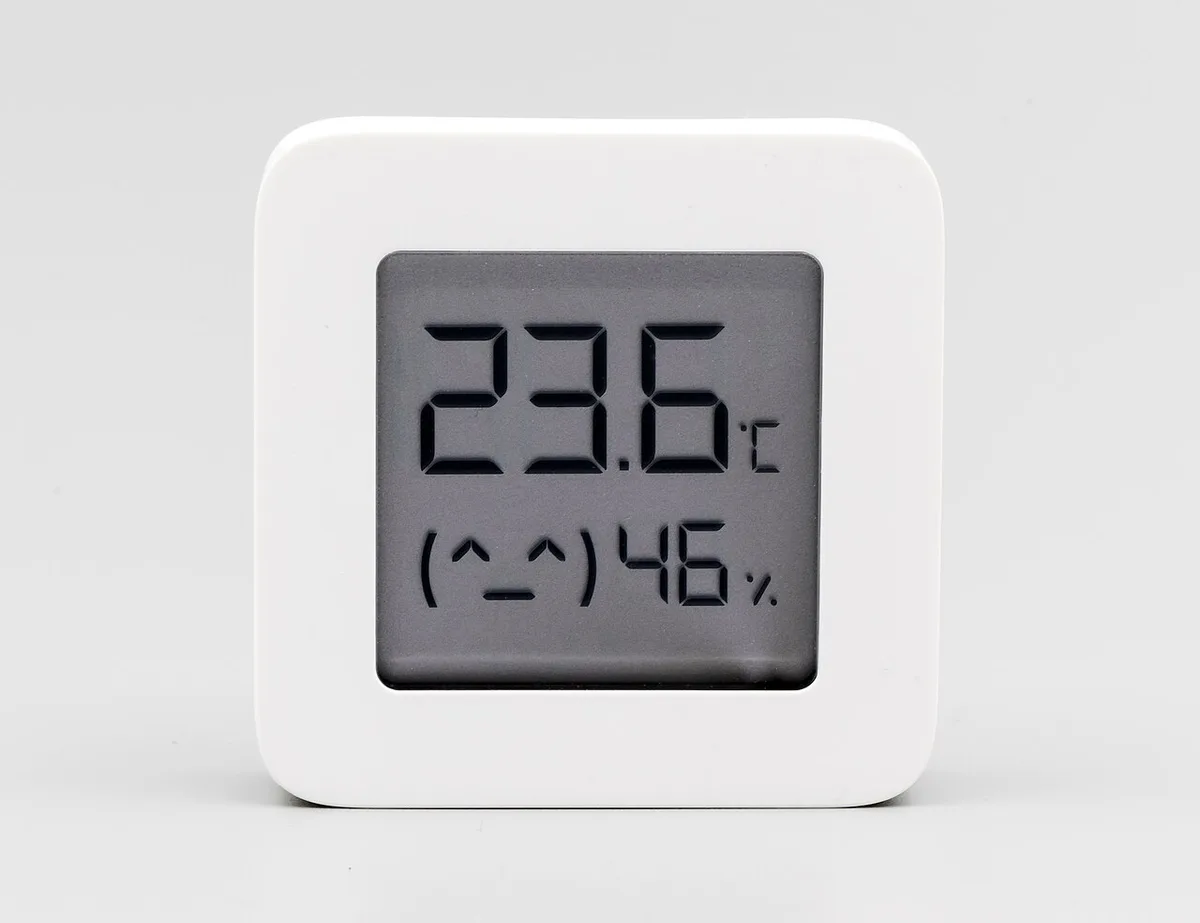
Confirm what the device measures
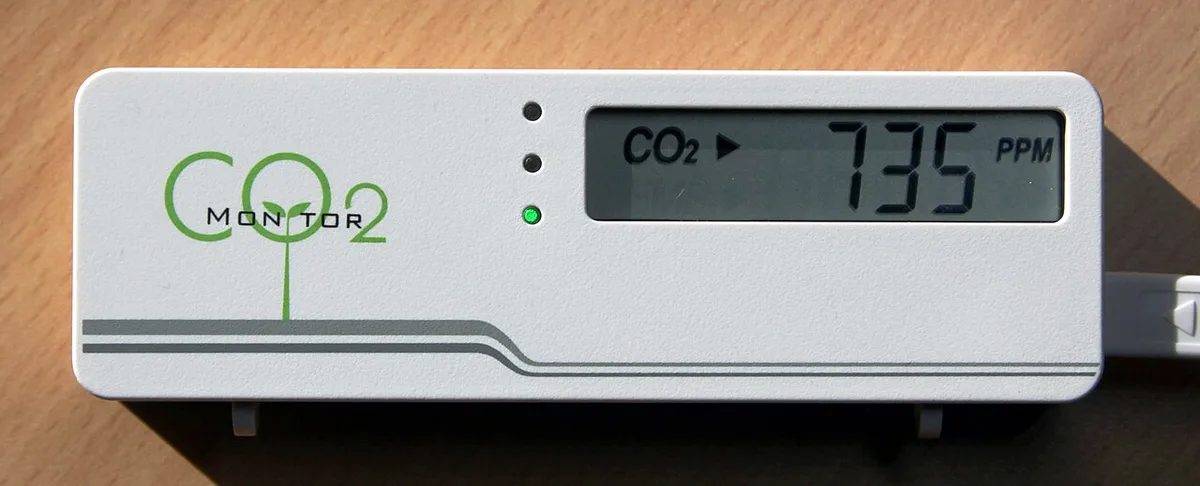
Read the exact model specification and manual before relying on the display. Keep CO2 separate from carbon monoxide, humidity, particles and other quantities. Similar abbreviations or a shared “air quality” label do not make the measurements interchangeable. Check whether a value is directly measured or estimated and what the manufacturer says about its use.
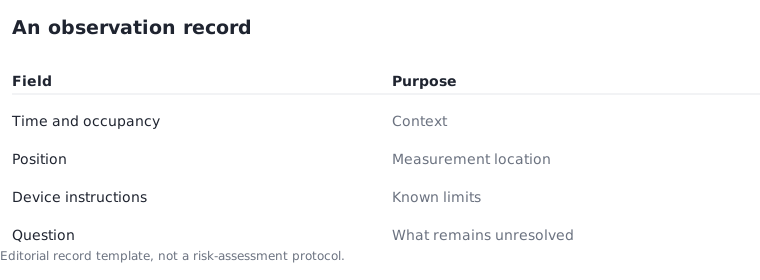
Use 3 steps for the record: name the measurement, note the units, then save the device's stated limitations. Do not infer capability from the number of coloured lights on the front. A simple device can be useful for a narrow question, while a complicated dashboard can still leave important quantities unmeasured.
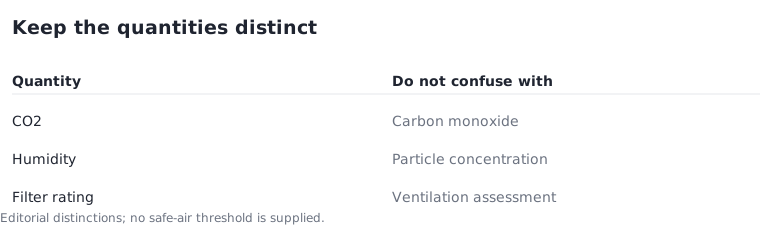
Record more than a snapshot
For an illustrative observation plan, you could take 3 readings at relevant times during ordinary occupied use, recording the actual times, occupancy and ventilation context. This is an editorial example, not a formal workplace assessment method or a domestic safety test. Follow the device instructions and any appropriate professional guidance for your situation.
If you choose to review a log after 7 days, do not interpret that period as a requirement to delay action. A visible problem, an alarm or another urgent concern should be handled through the appropriate route. Missing readings should remain missing rather than being replaced with guesses to make the table look complete.
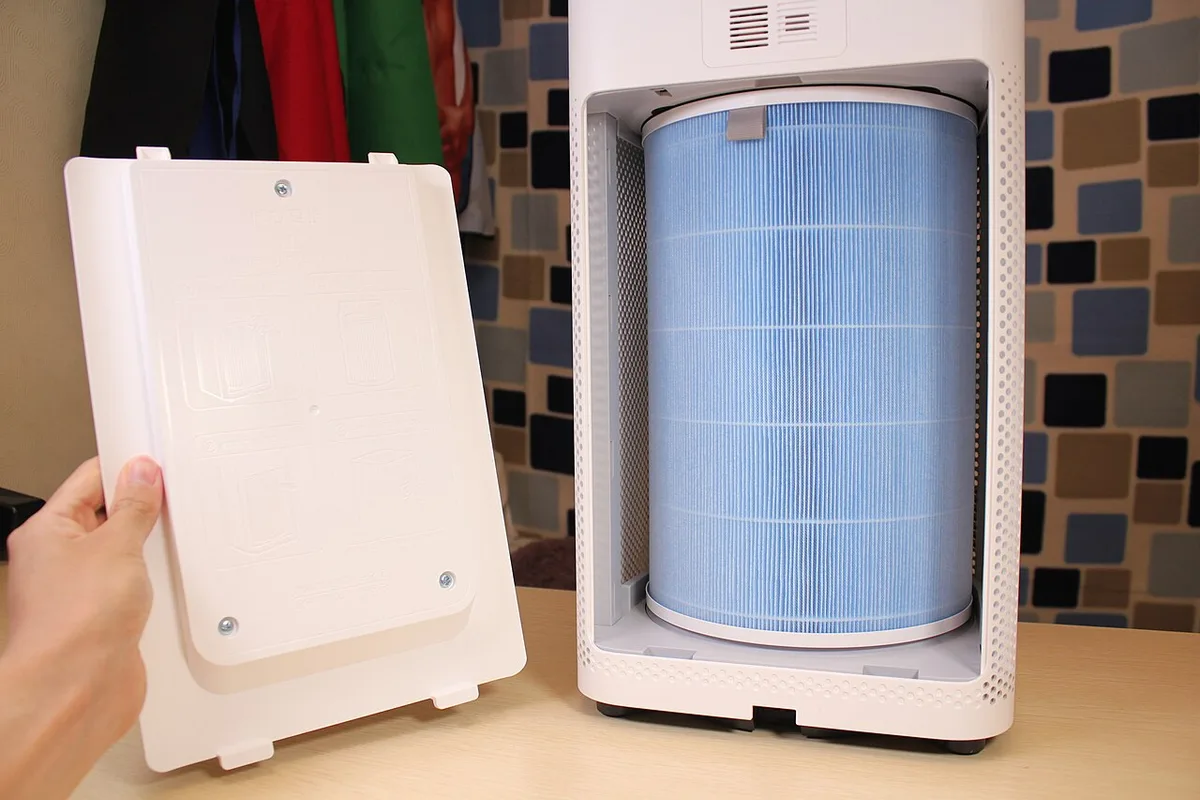
Do not use a purifier as a universal explanation
A particle-filtering appliance and a CO2 monitor concern different quantities. Do not assume that a change in one display proves all pollutants were reduced, or that a purifier should make every monitored number fall. Ask what the appliance is documented to do and what the monitor actually detects before linking the two.
Keep observations separate from causes. A note saying a door was opened or occupancy changed is useful context. A conclusion that a particular action made the whole room safe requires much more than one value. If the question concerns ventilation adequacy, use appropriate advice rather than trying to infer it from an attractive product dashboard.
Prepare a useful question for support or advice
Save the model, measurement type, placement, operating instructions and relevant observations. Explain what you are trying to understand and what changed. This gives a manufacturer or appropriate adviser a clearer starting point than a photograph of an unexplained number. Avoid publishing personal household routines when a private record will do.
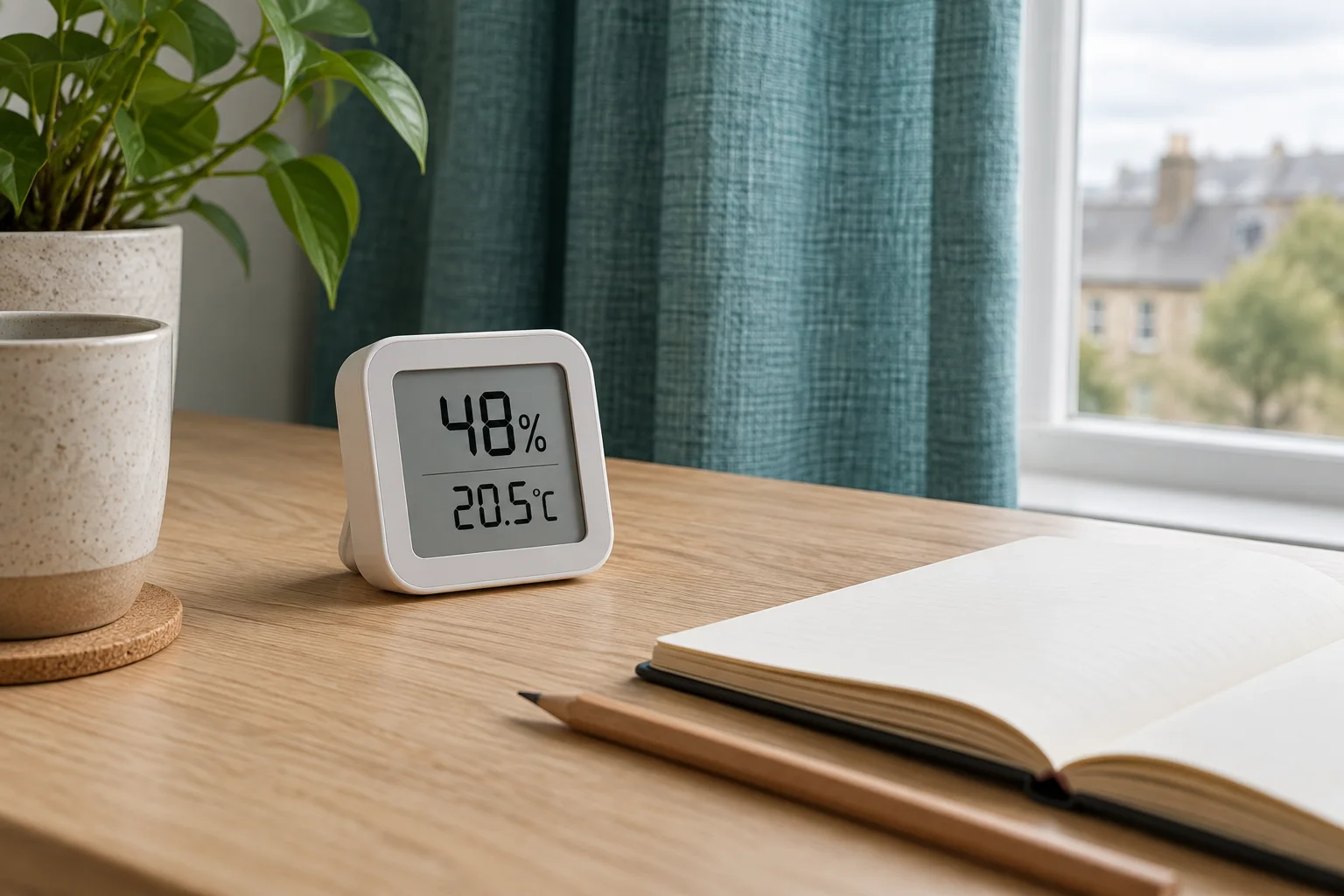
The historical humidity display is explicitly not a CO2 monitor. Compare its humidity units with the CO2 label and ppm units visible on the separate TFA monitor photograph. The purifier photograph shows a particle-filter compartment, a third distinct function. None of these images establishes a safe-air threshold. Use the guide to keep the questions distinct and evidence traceable while recognising the limits of a consumer device.