Keep a humidity log that preserves the context
Record the temperature, place and activity beside a reading instead of treating one number as the whole room.
Updated:
Decide what you want the record to explain
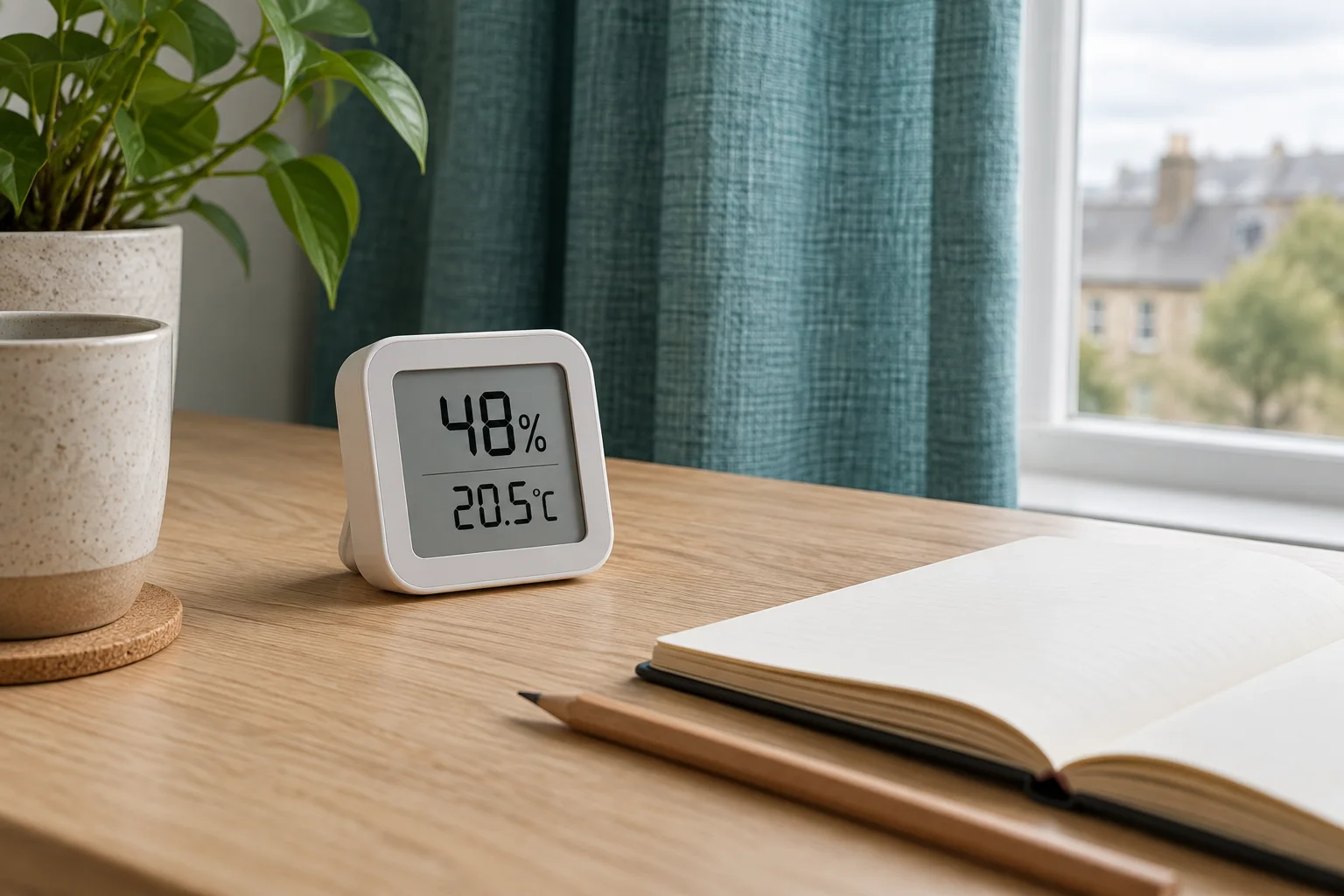
Energy Saving Trust describes home monitors as devices that can measure different quantities, including humidity, depending on the model. Start by confirming what your own device actually measures. A humidity percentage is not a complete air-quality score, and a reassuring-looking display should not erase a visible building problem or another reason for concern.
Write a narrow purpose for the log: perhaps you want to describe when a room reading changes or provide clearer information when asking for advice. Do not make the purpose “prove the room is safe”. The record is an observation aid, not a diagnosis or a substitute for appropriate investigation.
Energy Saving Trust: home ventilation ?
Pair the value with its conditions
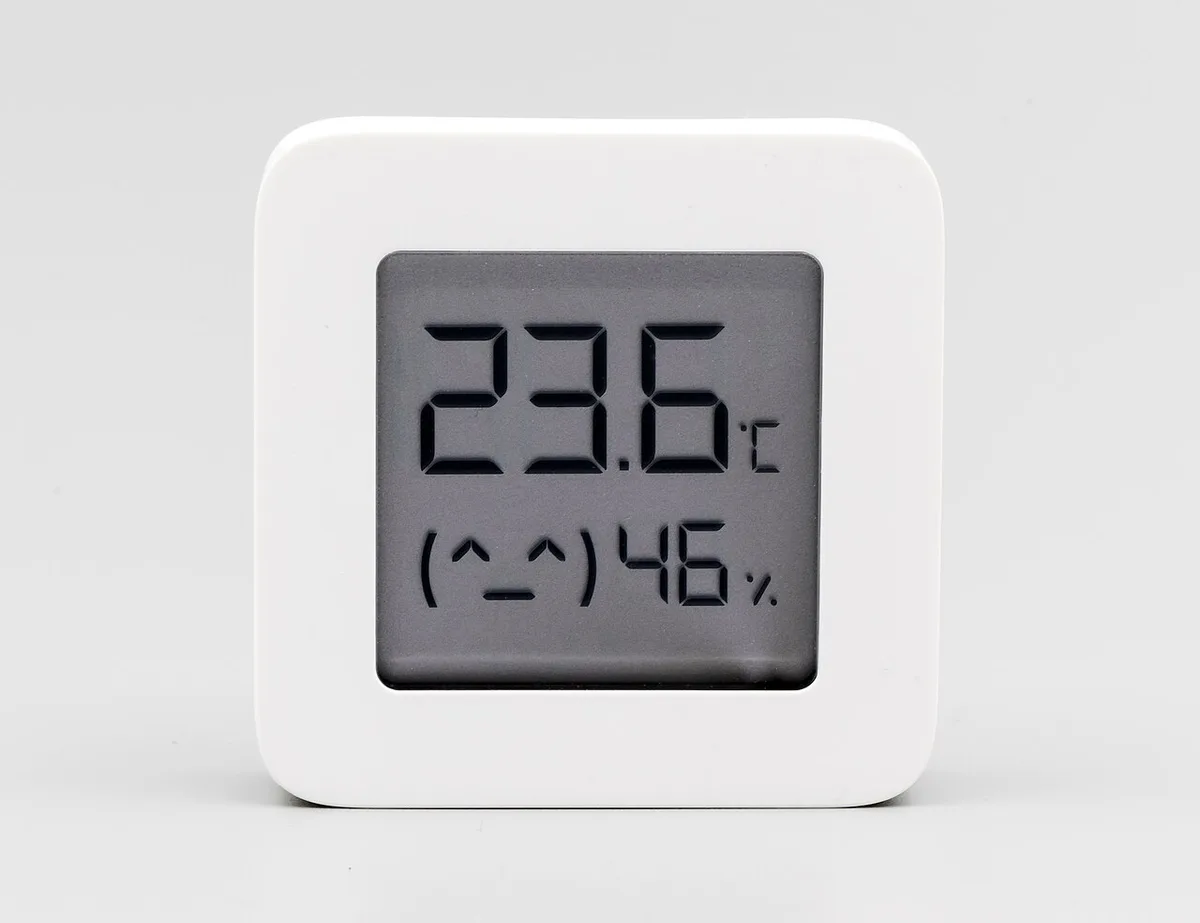
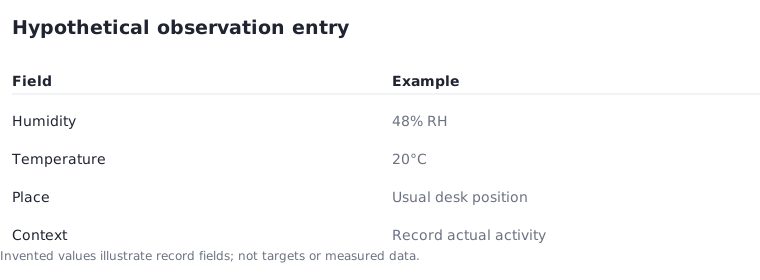
Record the displayed humidity and temperature together, along with the time, location and any relevant activity. A hypothetical entry might say 48% RH at 20°C at the usual desk position. Those invented values are not a target, threshold or claim about a real room. They simply show the fields that make a note easier to interpret.
Keep the device identifier and its instructions with the log. Note whether the device has been moved or recently started, and follow its requirements for stabilisation and calibration. Do not compare a reading taken immediately after moving the monitor with another taken under different conditions without recording the change.
Choose a repeatable observation pattern
For an illustrative record, choose 3 observations at times that are useful for your question: before an activity, after it and later when the room has returned to ordinary use. This is an editorial example, not a scientific sampling protocol. Write the actual times rather than assuming an automatic interval fits every situation.
You might review the notes after 7 days to see whether the record is useful. Do not wait for that review if a problem needs immediate attention. Keep gaps visible instead of filling them with remembered or invented readings. A short honest log is more informative than a complete-looking table whose values cannot be traced.
Describe changes without inventing a cause
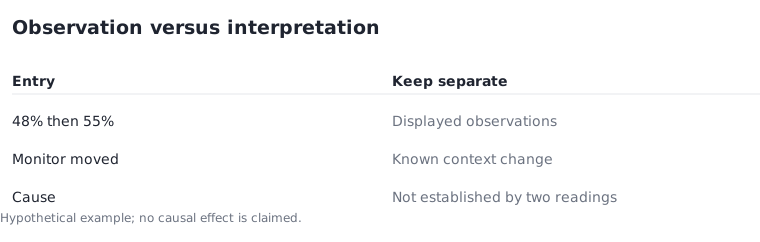
If a reading changes from a hypothetical 48% to 55%, record both values and the circumstances. Do not automatically attribute the difference to one appliance or one action. Several things may have changed, and a consumer monitor has its own limitations. The log should distinguish an observation from your interpretation of it.
Use plain notes such as “monitor moved” or “door opened” when those events occurred. Avoid causal labels such as “purifier fixed humidity” unless you have suitable evidence for the claim. If the record is being shared with a professional, the raw observations and conditions are usually more useful than an unsupported conclusion.
Keep the record useful and proportionate
Use 3 steps at review: check that the entries are traceable, identify the unanswered question, then decide who or what source can help answer it. Preserve the log alongside photographs of any relevant visible issue if appropriate, but avoid publishing private household details unnecessarily. Recording a problem is not the same as resolving it.
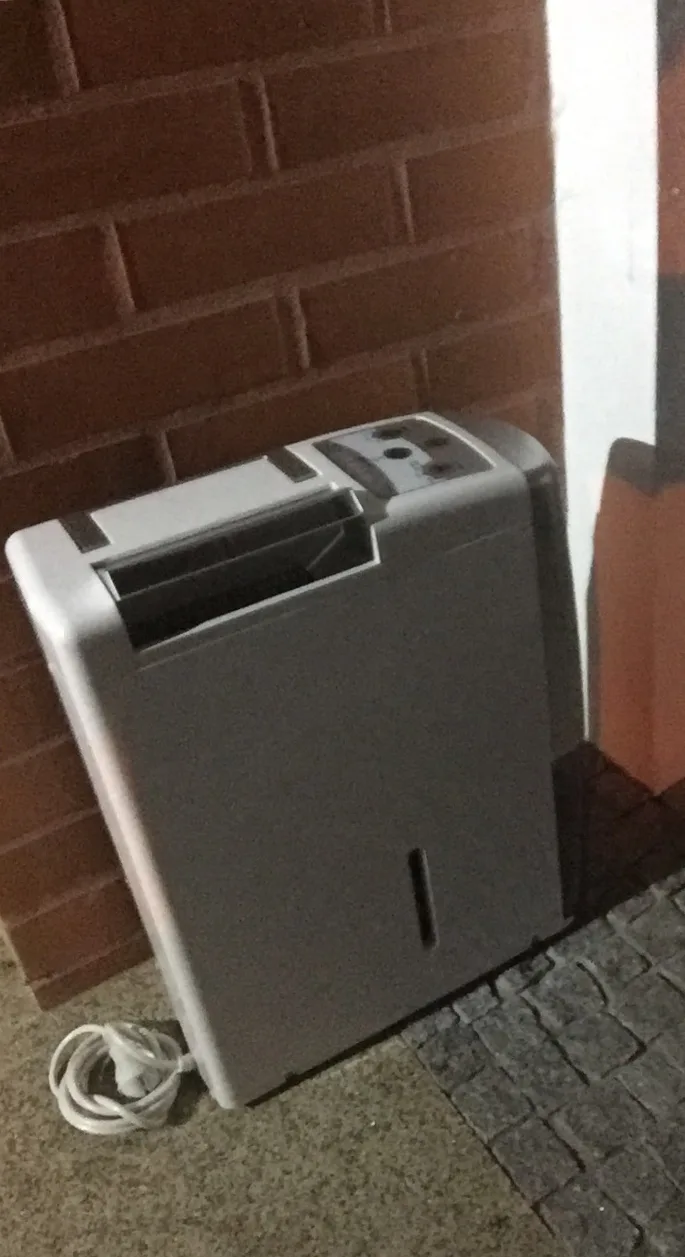
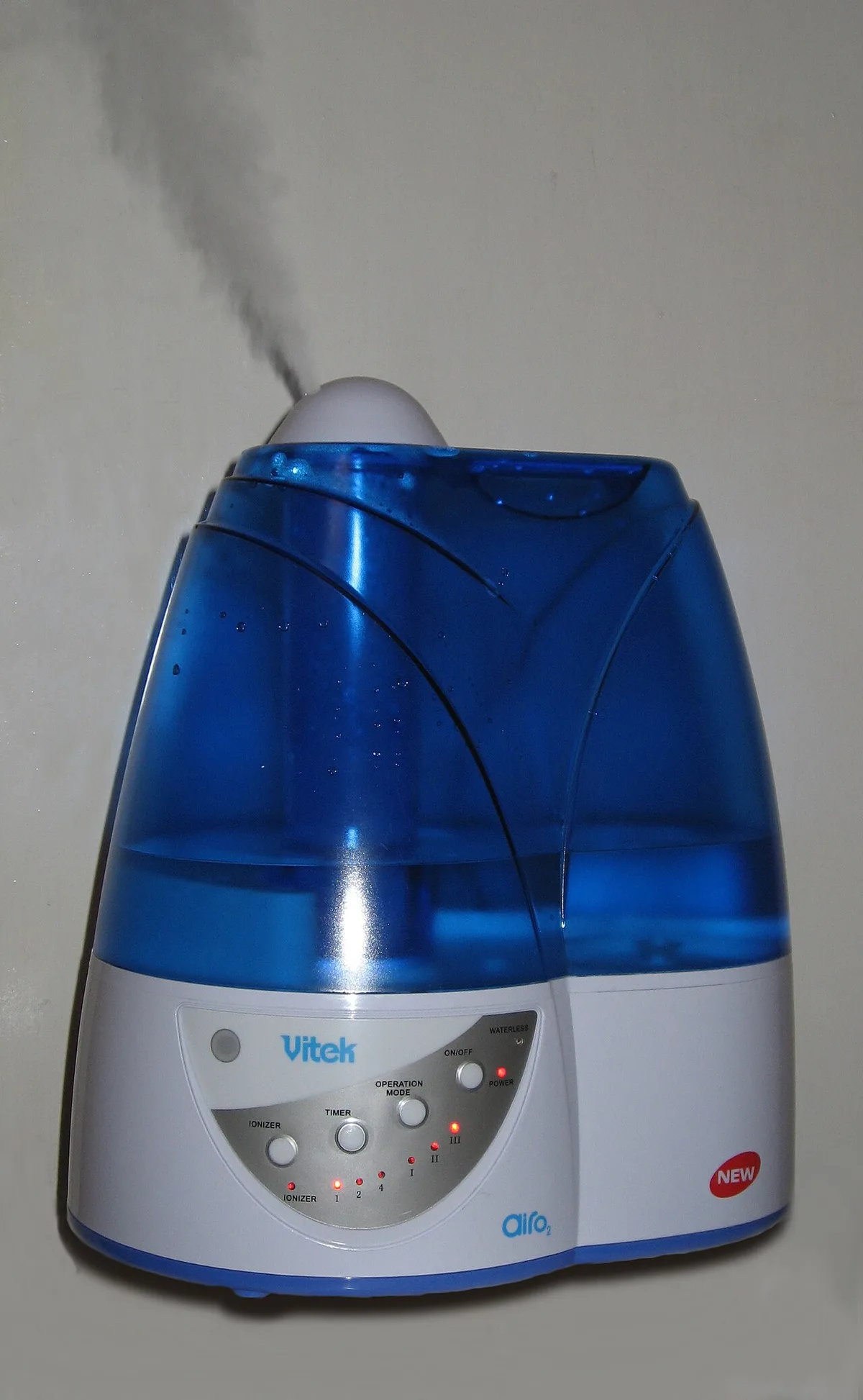
The humidity-display photograph shows a real historical device with a temperature and percentage. The humidifier and dehumidifier photographs illustrate different water-handling functions, not a recommended response to any particular value. Keep the images and examples in that limited role while you use the actual device instructions and appropriate advice for your situation.