Check a monitor position before comparing readings
Use the device instructions and a clear location record so movement does not become an invisible variable.
Updated:
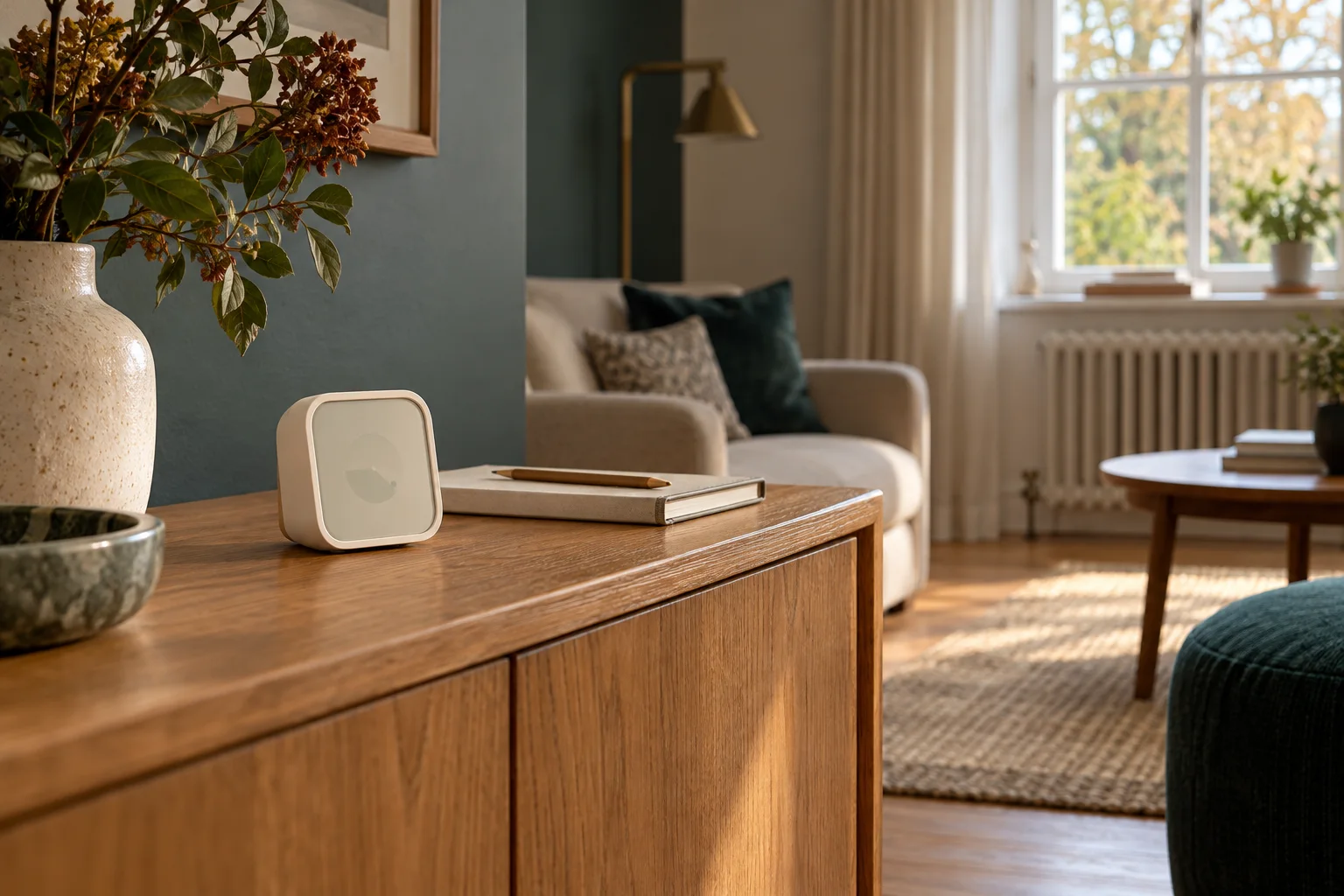
Start with the measurement type
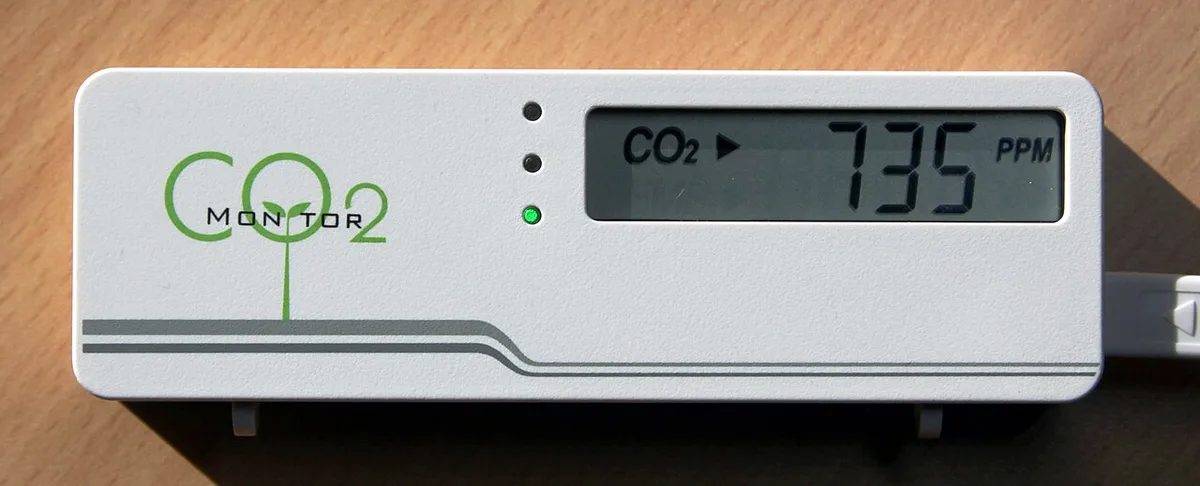
HSE's workplace CO2 guidance says concentrations can vary within a space and advises trying representative locations. Its context is workplace ventilation, not a universal placement standard for every home humidity or particle monitor. Start by identifying your device's measurement type and following its own placement instructions.
A monitor that looks similar to another may use different sensing methods and have different requirements. Save the exact manual and model identifier. Do not transfer a distance or height from a CO2 guide to a humidity sensor without checking whether it applies. The useful habit is to make the location deliberate and documented.
HSE: using CO2 monitors in workplaces ?
Make a location record
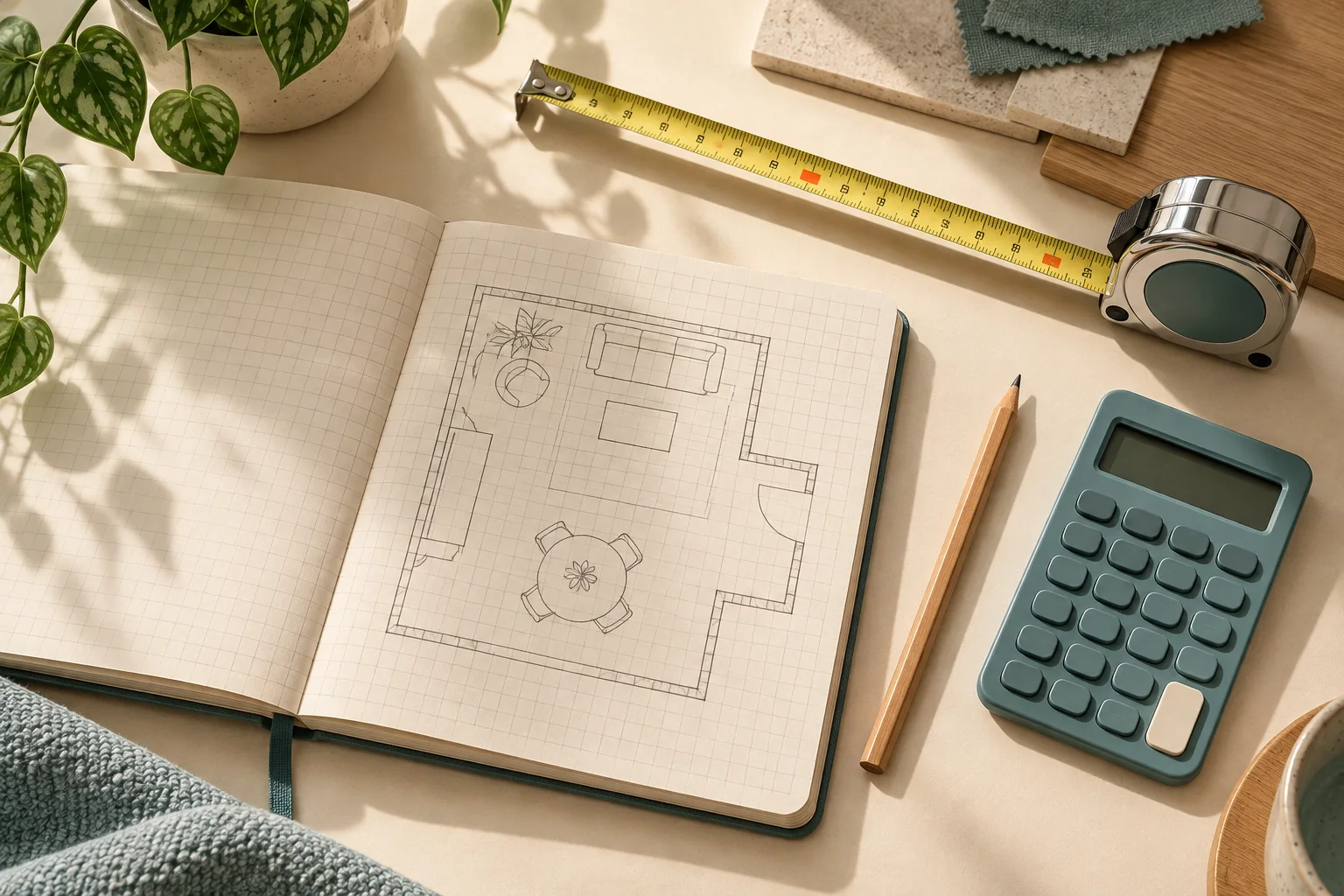
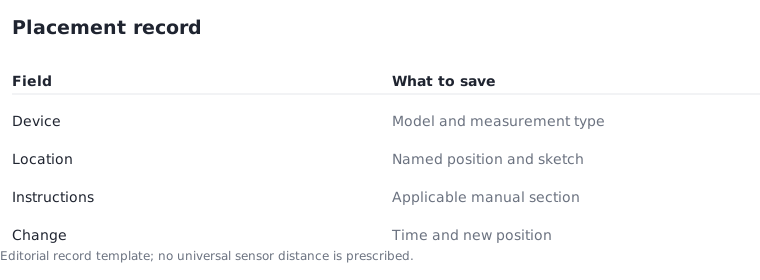
Use 3 steps: name the position, describe nearby features, then record the device orientation and any relevant instruction. A simple room sketch can be enough. Mark windows, doors, outlets and the ordinary occupied area if they matter to the manufacturer's guidance. Do not create a false impression of precision by giving coordinates you have not measured.
Review the placement note 2 times: once against the manual and once against the room as it is normally used. These are editorial checks, not a calibration procedure. If the room changes, update the note rather than continuing to treat the old location description as current.
Keep movement visible in the data
If you move the device, record the time and new position. Follow its instructions for stabilisation before relying on a reading. Do not place a freshly moved value beside a previous one without noting the change. Otherwise a location difference can look like a change in the whole room.
For an illustrative record, you might label positions A and B and take 3 observations at each only when the device instructions and your purpose support that approach. That is not a scientific sampling plan or proof that either position represents the whole space. The point is to preserve what you actually did rather than hide the movement.
Do not use one snapshot as a verdict
HSE cautions that snapshot CO2 readings can mislead and recommends recording occupancy and ventilation context in its workplace guidance. Carry forward the principle of documenting context while keeping the scope clear. A domestic consumer reading should not be presented as a certificate of safe air or a diagnosis of a building problem.
Write down the event you observed and the uncertainty that remains. If you are comparing devices, follow appropriate manufacturer guidance and avoid claiming calibration merely because two displays agree once. Similar values can be reassuring as an observation without proving accuracy or suitability for a particular decision.
HSE: using CO2 monitors in workplaces ?
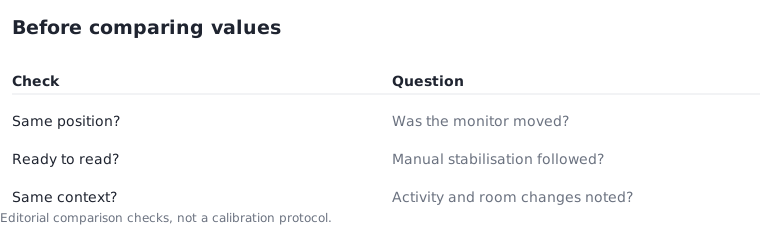
Use the note to ask a precise question
A useful support question includes the model, placement, time since moving or starting, and the behaviour you are trying to understand. This is more actionable than reporting that a monitor “seems wrong” with no context. Keep the response and date with your record, especially if it changes how you use the device.
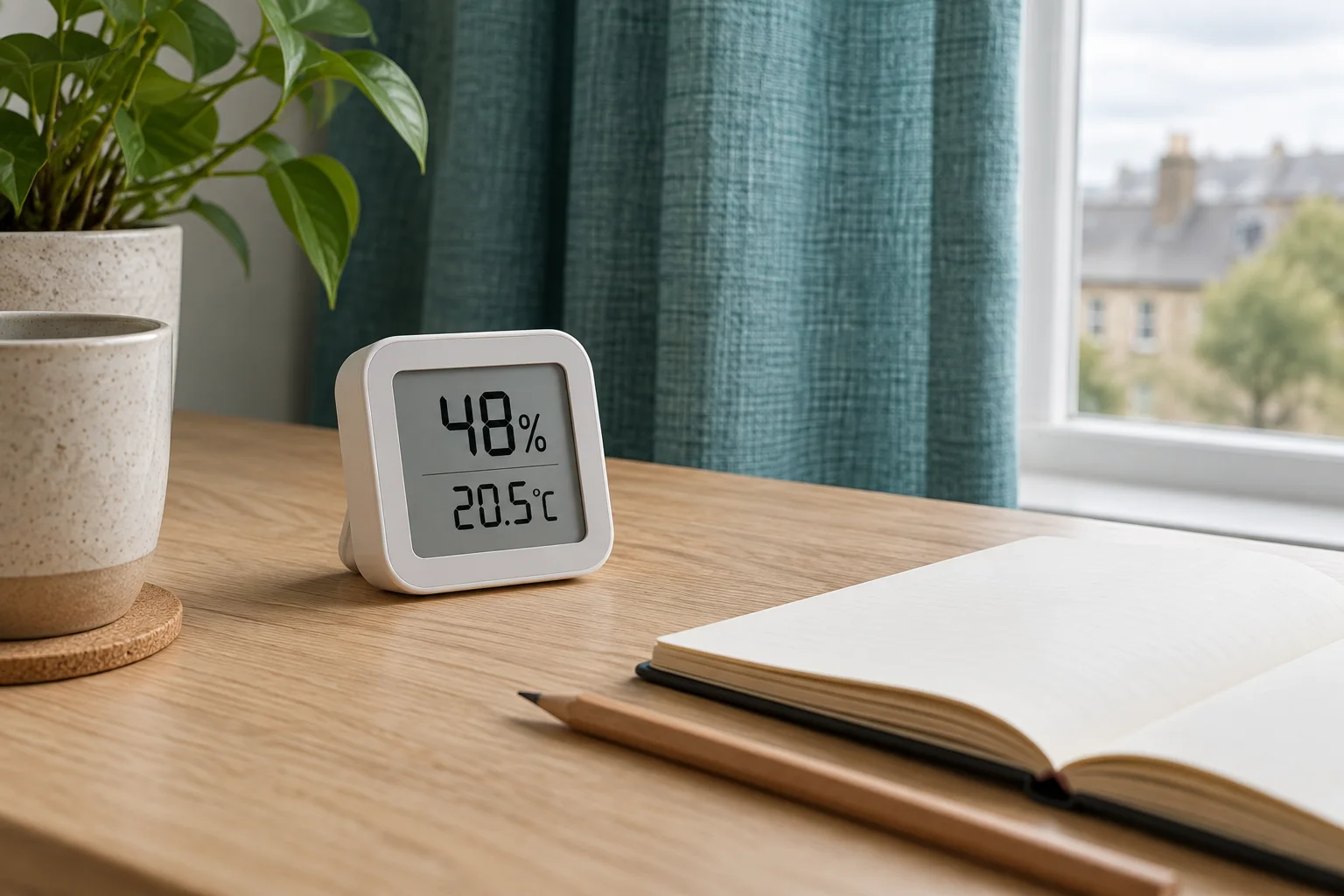
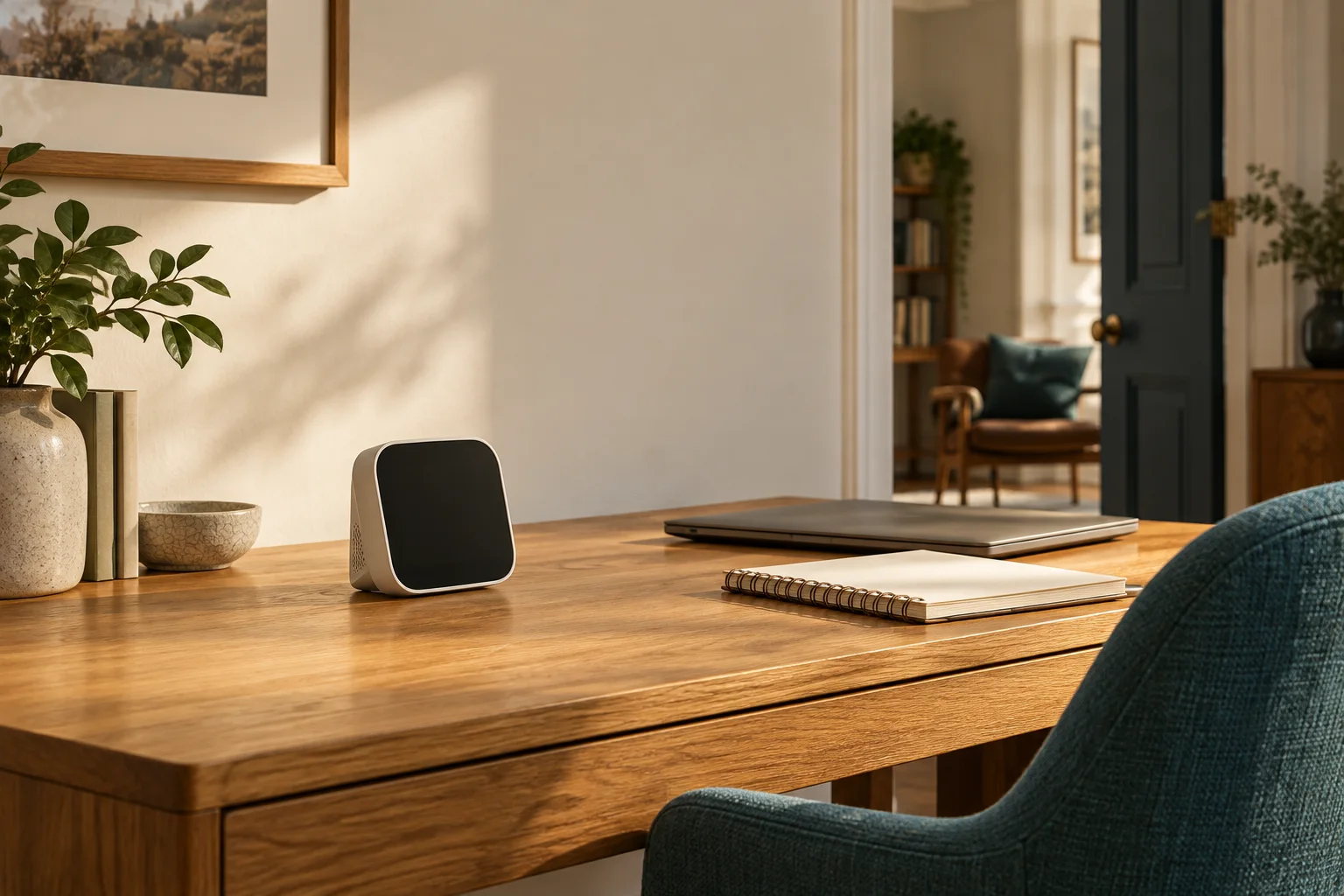
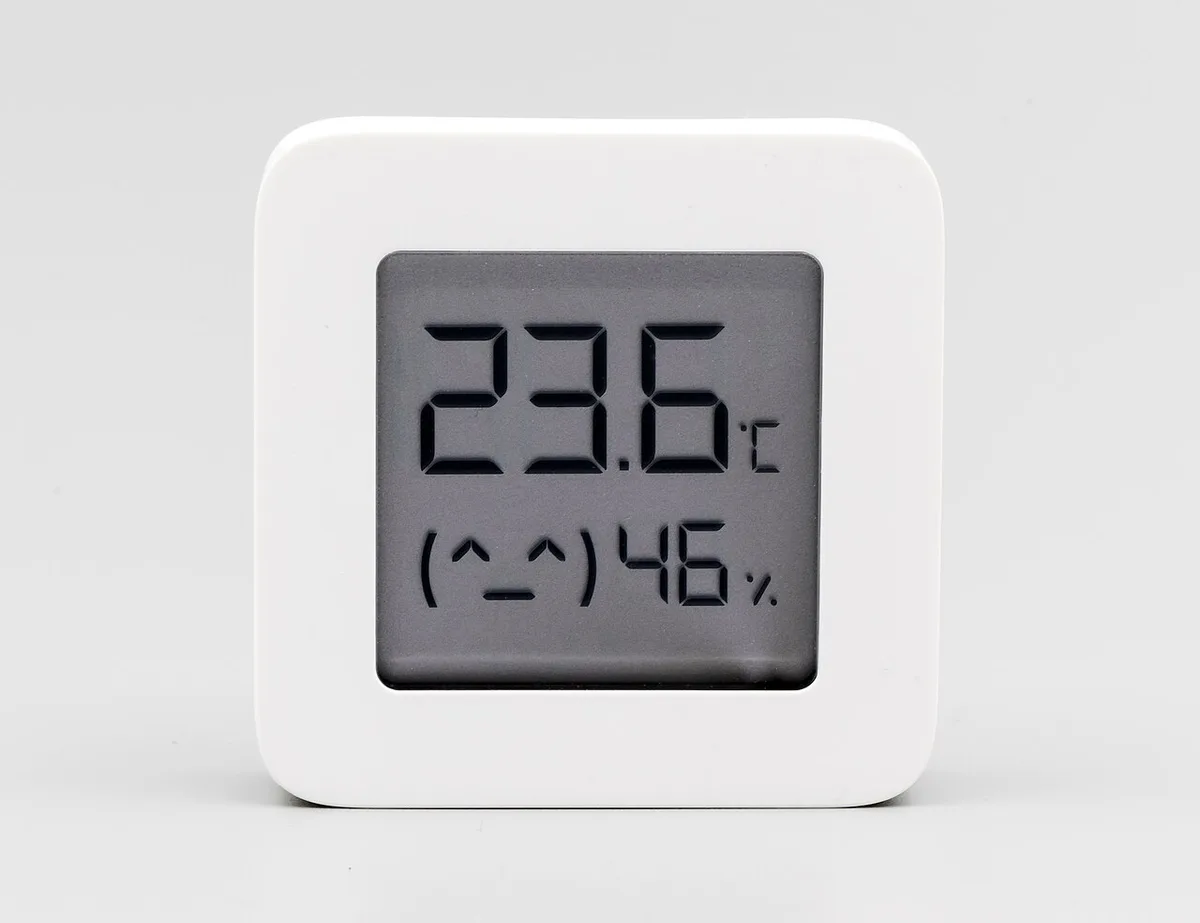
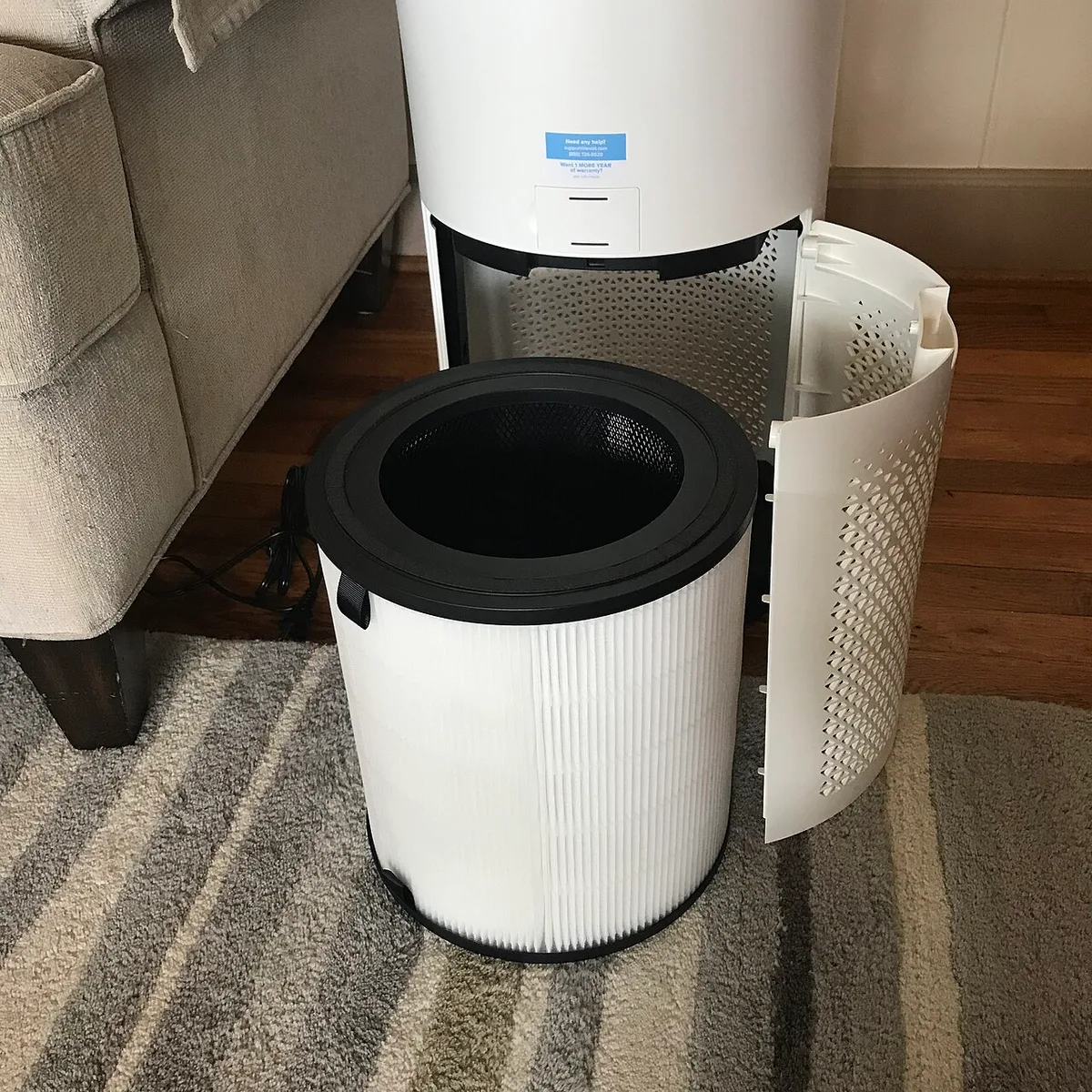
The historical humidity display in the photograph is not a CO2 monitor. The purifier and humidifier photographs illustrate nearby appliance types that may belong on a room sketch, not a controlled test. Keep those distinctions explicit. The final aim is a traceable observation process, not a universal position that supposedly works for every sensor.