Tank capacity divided by output is only a simplified runtime
Use litres and millilitres carefully and keep a constant-output estimate separate from real operating behaviour.
Updated:
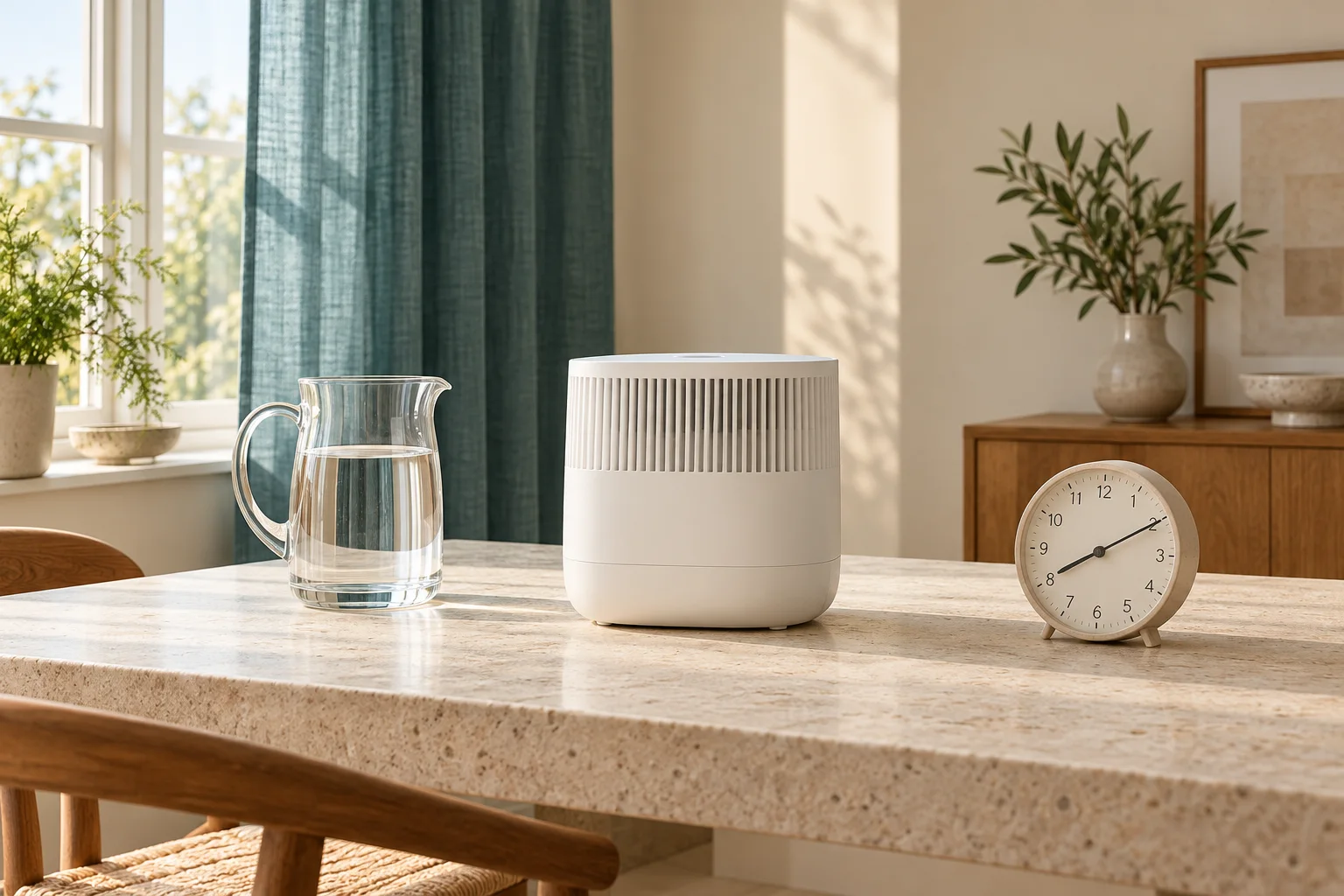
Read capacity and output as different quantities
The Meaco Armin 680 manual lists tank volume and evaporation rate separately. That distinction is useful even if you are considering another model. A tank holds a quantity of water; an output rate describes a quantity per unit of time. Neither label should be shortened to a bare number in a comparison sheet.
Record the exact units and the conditions attached to the output claim. Do not assume that a maximum or rated output describes every operating mode. The calculation below uses invented values to explain the arithmetic. It is not a runtime claim for the cited Meaco model or a prediction about your room.
Meaco Armin 680 manual EN304 ?
Convert the tank volume before dividing
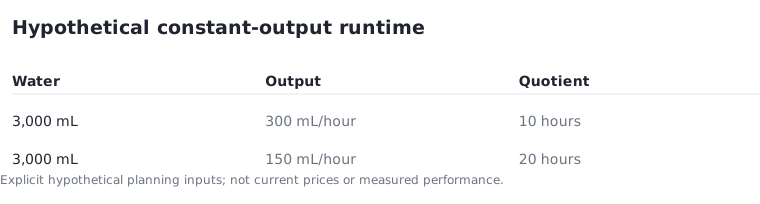
Assume a hypothetical usable water quantity of 3 L and a constant output of 300 mL per hour. Convert 3 L to 3,000 mL, then divide by 300. The simplified result is 10 hours. Keeping both quantities in millilitres makes the units consistent and the calculation easier to inspect.
If the same invented quantity were released at 150 mL per hour, the simplified result would be 20 hours. These are deliberately controlled examples. They do not account for automatic stopping, changing output, unusable residual water or a requirement to refresh water sooner. Do not use the result as permission to leave the appliance unattended or skip its care instructions.
Ask whether the rate stays constant
A humidifier may change its operation according to settings and measured conditions. The cited Armin manual describes automatic behaviour around a selected target, illustrating why a single continuous-output calculation is not the whole operating story. Keep that model-specific behaviour separate from the generic arithmetic example.
Ask the manufacturer what conditions underlie a stated runtime and whether the figure applies to a particular mode. Record the answer rather than assuming a low setting simply halves or doubles every relevant quantity. The relationship between a display setting and actual output should come from documentation or a properly described measurement, not an attractive calculation.
Meaco Armin 680 manual EN304 ?
Do not confuse runtime with a refill instruction
A calculated 10 hours is not a universal interval for refilling or changing water. The manual may require tasks for reasons other than the tank becoming empty. Keep filling, cleaning and storage instructions in their own record. A large tank does not remove those responsibilities or establish that the appliance suits the room.
If you make your own observation, record the start and finish times, mode and any interruption. Describe it as one observation under those conditions. Do not extrapolate a short trial into a guaranteed overnight duration or a performance ranking against a device tested in a different room.
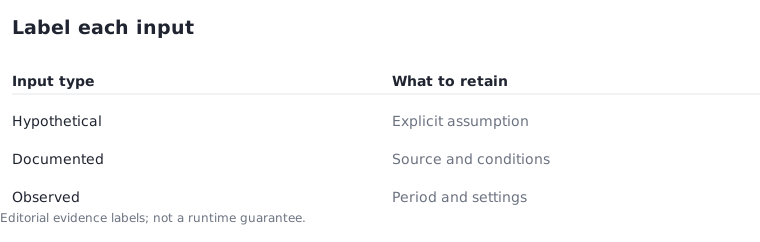
Save the assumptions with the result
Keep the usable water assumption, output rate, units and calculation together. Mark whether each input is hypothetical, documented or observed. Our example is hypothetical throughout. If the manufacturer supplies a runtime under stated conditions, preserve those conditions when comparing it with another claim.
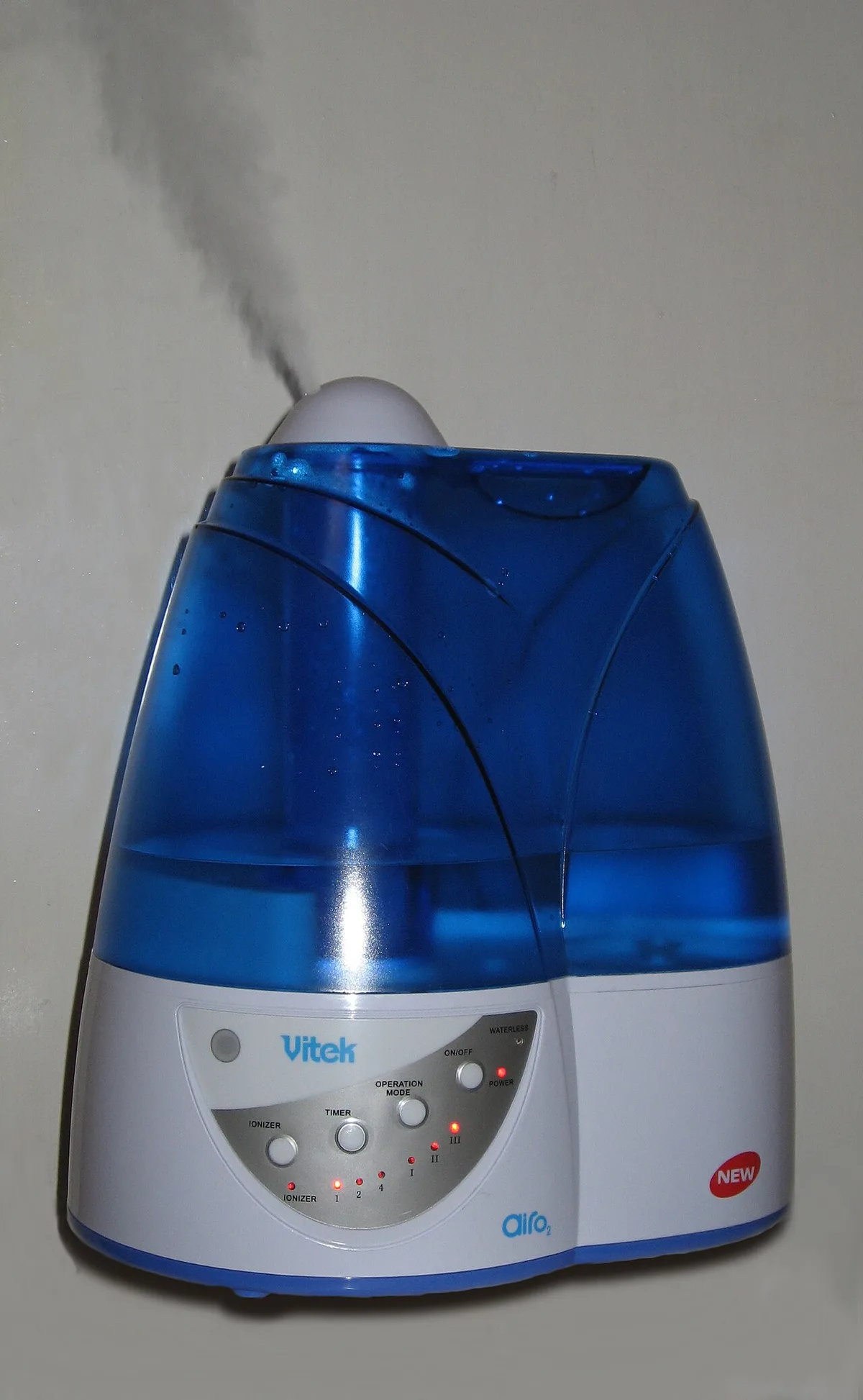
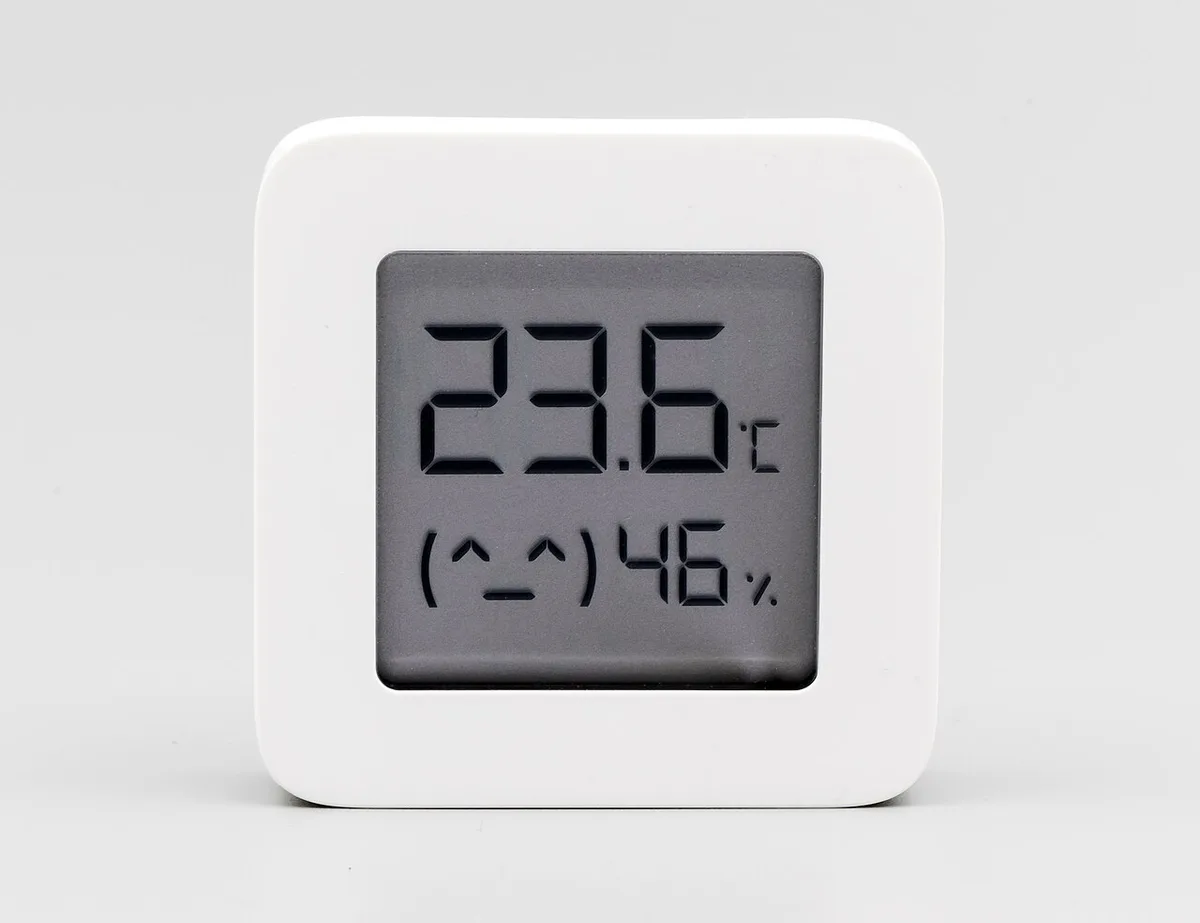
The historical ultrasonic photograph shows visible mist from a different type of appliance; it does not establish the output of an evaporative model. The humidity monitor and dehumidifier images illustrate different measurements and water-handling tasks. They help keep the categories distinct while you read specifications, without suggesting that any pictured device was tested by this site.